
By Abi Whistance and Lisa Rand
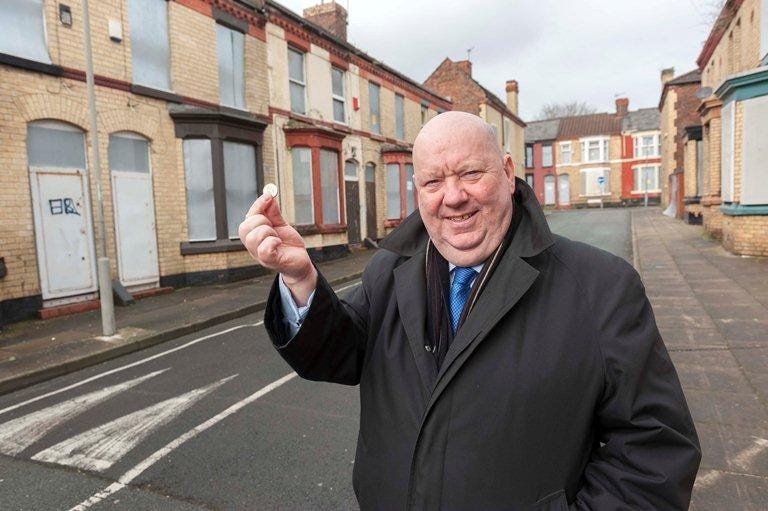
In 2013, Liverpool City Council launched an initiative that, like reduced-price sushi and buying a genuine Rolex down the pub, felt like a suspiciously good deal. The £1 housing scheme was ostensibly launched as a way of bringing terraced houses previously earmarked for demolition back to life, and with them, the creation of vibrant new home-owning communities.
Cooked up by former mayor Joe Anderson, the initiative had just the one catch: the new owners had to use their own funds to coax the homes back to life – an estimated £60k for each renovation, according to the council’s surveyors.
Thousands of local residents applied, and dozens of houses were brought back to their former glory. The press lapped it up: Channel 4 shot a documentary, the Mail took photos of a proud homeowner with long copper tresses polishing some lovely tiles in her hallway. But more than a decade later, questions persist. Like, what happens when something which sounds fantastic in theory makes contact with reality? Do the people who parted with one hundred pennies still feel they got a good deal? And can this much-feted project really be considered a success if dozens of the houses remain unsold?
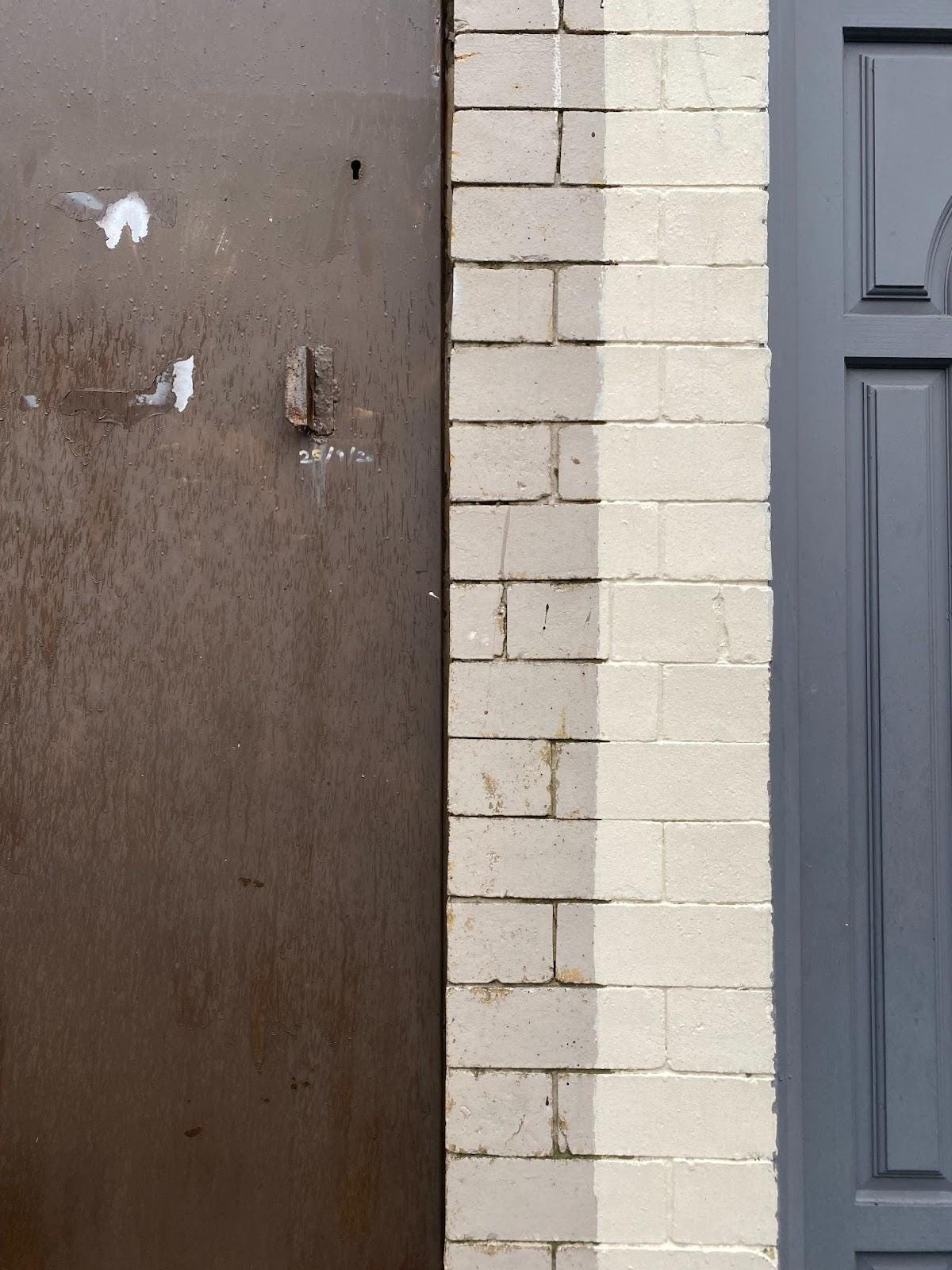
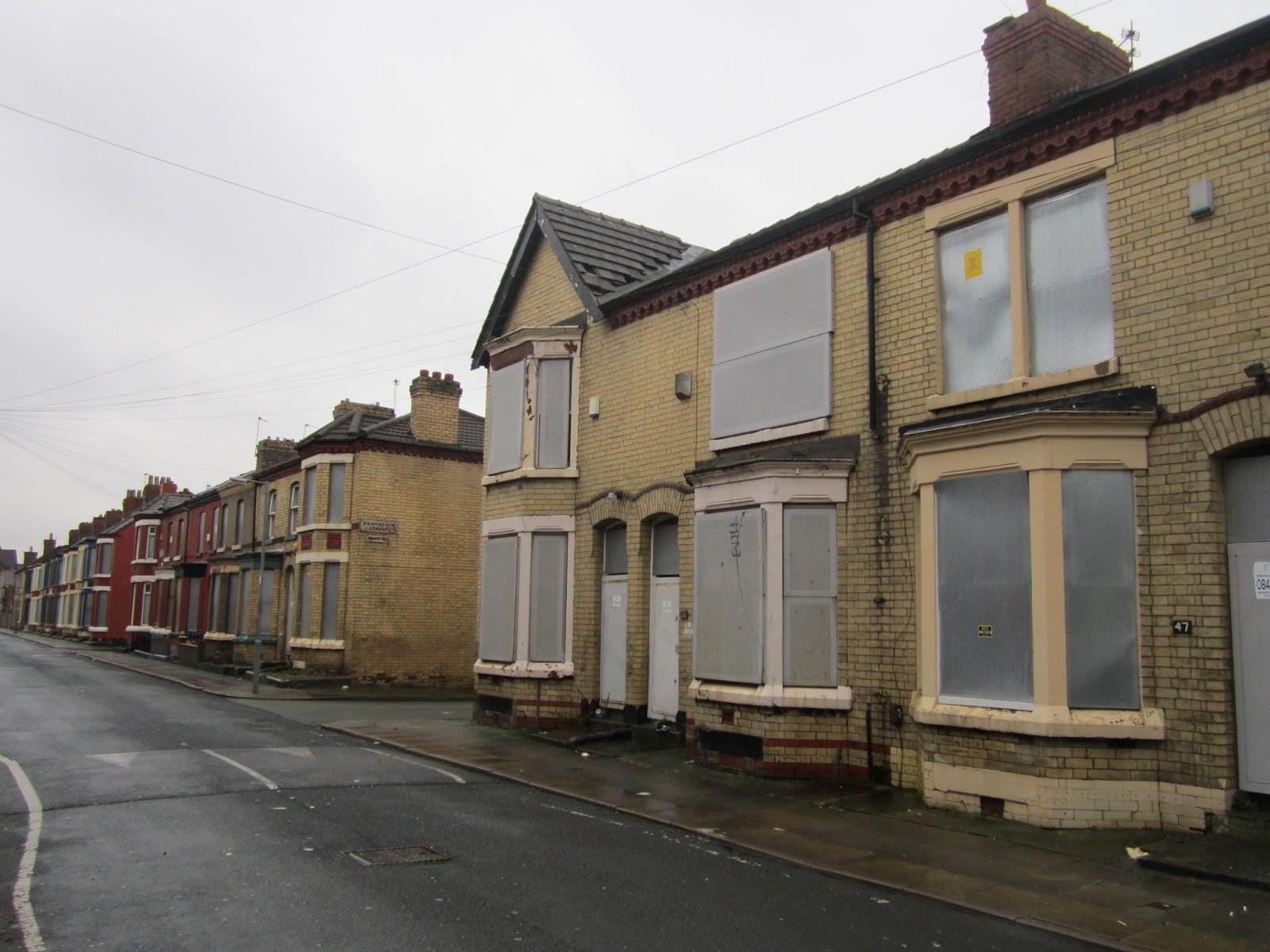
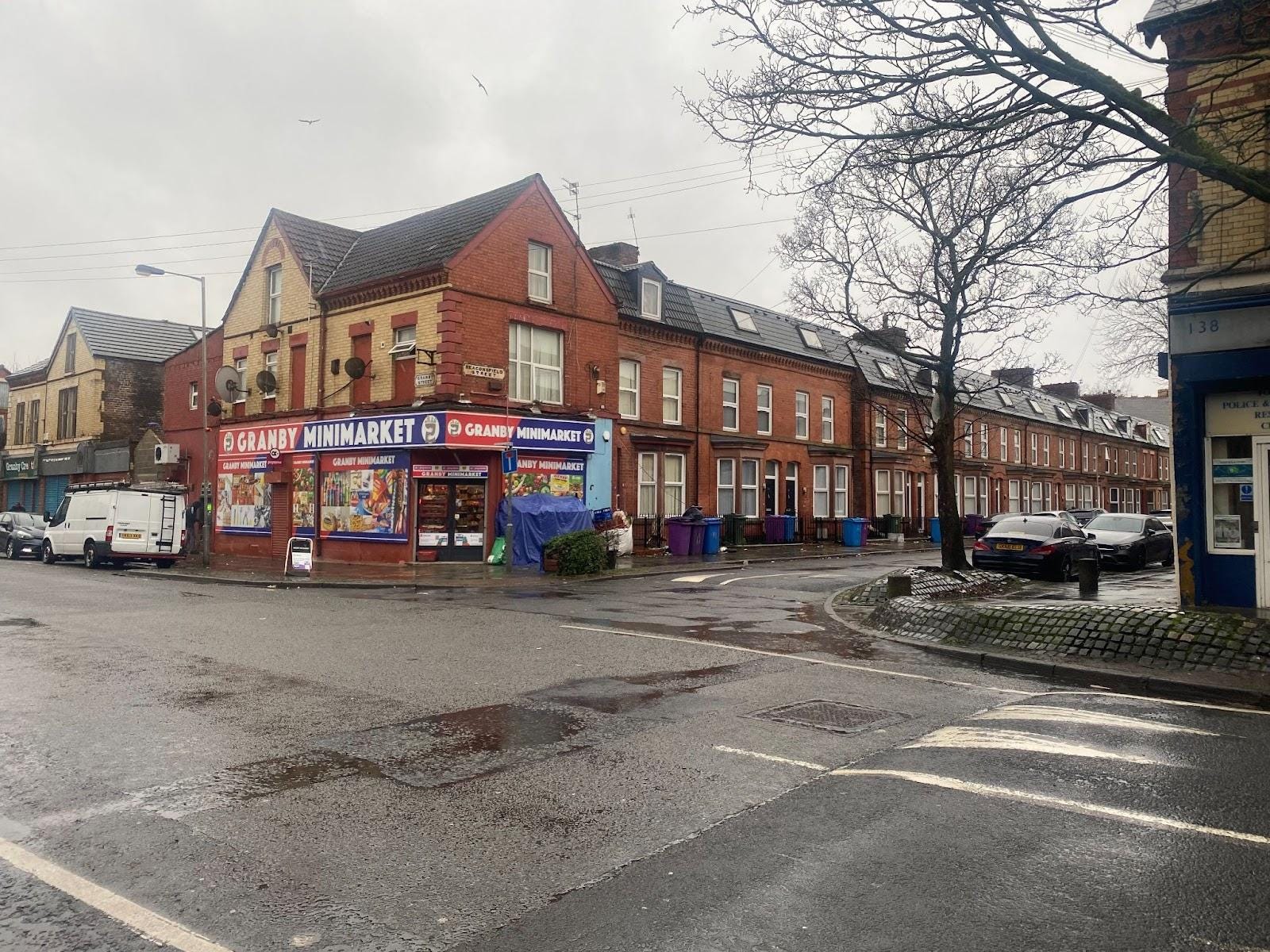
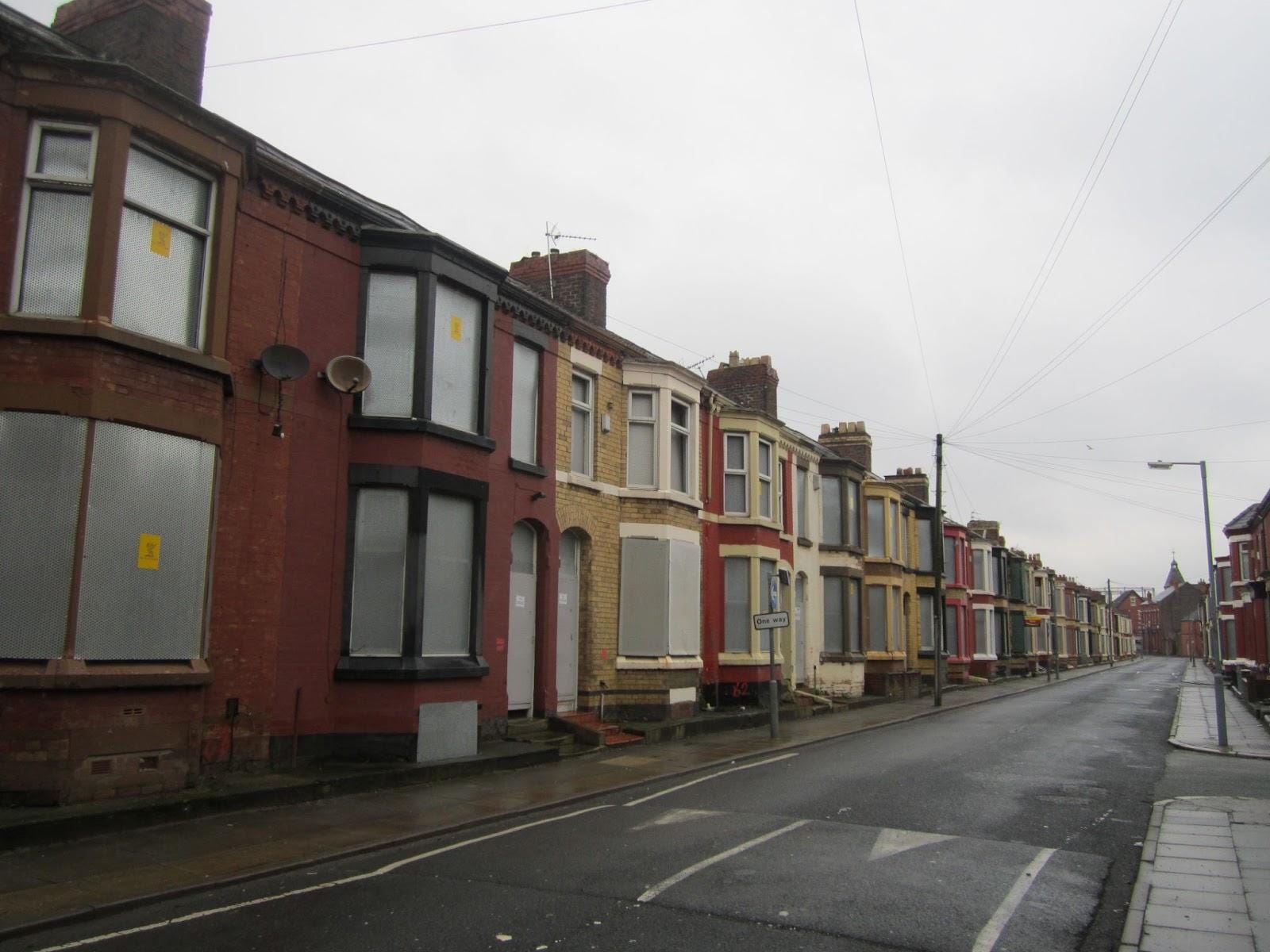
Garrick Street is the perfect before-and-after study. Only, here, the order is flipped. Lining half of the road are cosy terraced houses, some freshly painted in creams and baby blues, perky little plants bloom from window boxes, brass knockers gleaming on the doors. But cast your eye further down the street, and you’ll be confronted by clusters of tinned-up windows which prevent any sunlight illuminating the interiors of still-derelict buildings. Instead of the pretty blooms, the only colour is the yellow Liverpool City Council stamp on the metal shutters. These mark quite a contrast to the neighbouring properties; harsh white lines painted down the bricks to separate the renewed from the old and downtrodden.
“We kept our side of the deal, now the council needs to keep theirs,” Shakir, a resident of the street, tells us, inviting us inside for a chat. His home looks straight out of a Modern Living catalogue — all sleek wooden floors and silver furnishings, and there’s a camera-ready polish to the place. It’s clearly a source of pride for Shakir.
As we chat, Shakir reveals the scheme hasn’t quite lived up to expectations. Dozens of houses in the area, known as the Webster Triangle, remain abandoned, including one next door. Water leaks into his home from the adjoining property’s roof, and the sounds of pigeons rustling in the walls at night scare his children.
Shakir tells us that he’s complained to the council countless times and has asked them when they plan to fix up or sell the remaining empty houses. Each time, he says, he’s been met with the same answer. The council doesn’t know.
“We felt like we were very lucky at first,” Imran, another Garrick Street resident, tells us. He invites us into his home, offering drinks before explaining that he first heard of the £1 scheme when it started in 2013, after a friend rang him to convince him to apply. “[My friend], he’s a bit of a joker so I didn’t believe him,” he says, “I was like, a house for £1? No way.”
Within minutes his friend sent over proof that this was indeed the real deal, forwarding a post on the council’s website detailing how people could apply. Imran fired off an email — he was living in Wavertree at the time and wanted to move into the L7 area anyway — and waited anxiously for a response.
“Well, it didn’t look like this, like it does now,” he says as he shows me around his living room, a colourful carpet spread across the floor scattered with kids’ toys. Imran got the house; the fact neither he nor his wife had much in the way of life savings would not deter him. Who needs savings when your house costs less than a Big Mac? He remembers first visiting the property, standing in the living room and staring up at the sky through the dilapidated roof.
Still, roofless or otherwise, a quid’s a quid. And the state of dereliction wasn’t unusual. All of the properties up for grabs were terraced houses that had been earmarked for mass demolition as part of the controversial Housing Market Renewal Initiative (HMRI) in 2002. That meant compulsory purchases and streets left derelict awaiting the bulldozers. That is, until HMRI’s funding was curtailed and councils like Liverpool found themselves with houses that were uninhabitable and no money to do anything with them.
The solution? Accept the financial loss of effectively giving away the houses for next to nothing, and find residents with funds to do them up and rebuild a community.
For Imran that meant borrowing from friends and family abroad, as well as multiple loans with banks and credit card companies. He had no real choice in the matter — the council provided prospective buyers with a list of compulsory tasks; surveys suggested new residents would need around £60k to get the houses up to liveable standards.
“It was the worst time of my life,” Imran says. He spent all day renovating the house with a team of builders, followed by nights working as an Uber driver. He’d catch a few hours of sleep in between, fighting to carve out time to spend with his wife and two kids back in Wavertree.
Imran wasn’t the only one who felt this way. Steve — another £1 house resident who moved in 2021 after two years of renovation works — says the process nearly “broke him”. The council’s £60k estimate — it turned out — was a tad optimistic. Steve found himself forking out over £90k in total. “It was just constant sleepless nights, the stress of it all,” he says, adding that he almost went bankrupt in the process.
Like other residents, Steve also discovered issues that had not emerged in the council’s survey — mainly with the walls and roof, fairly essential parts of a house by anyone’s measure. “We stripped the damaged plaster off the walls, and at one point we saw the entire centre of the house was being held up by half a brick,” he says. “At that point we thought we needed to leave right now.”
Juggling his full-time job as an IT expert with the renovations, Steve admits the physical toil of lugging around heavy materials and conducting some of the work himself was almost as bad as the mental toll it was taking: “I looked like I’d lost the will to live, I looked like a broken man.”
It sounds pretty harrowing, yet when we ask Steve if he’d go through it all again, he insists he would. “I got to make a home, and everyone here is really, really nice,” he says. “We’ve all got this unspoken mutual respect for this thing we’ve all gone through.”
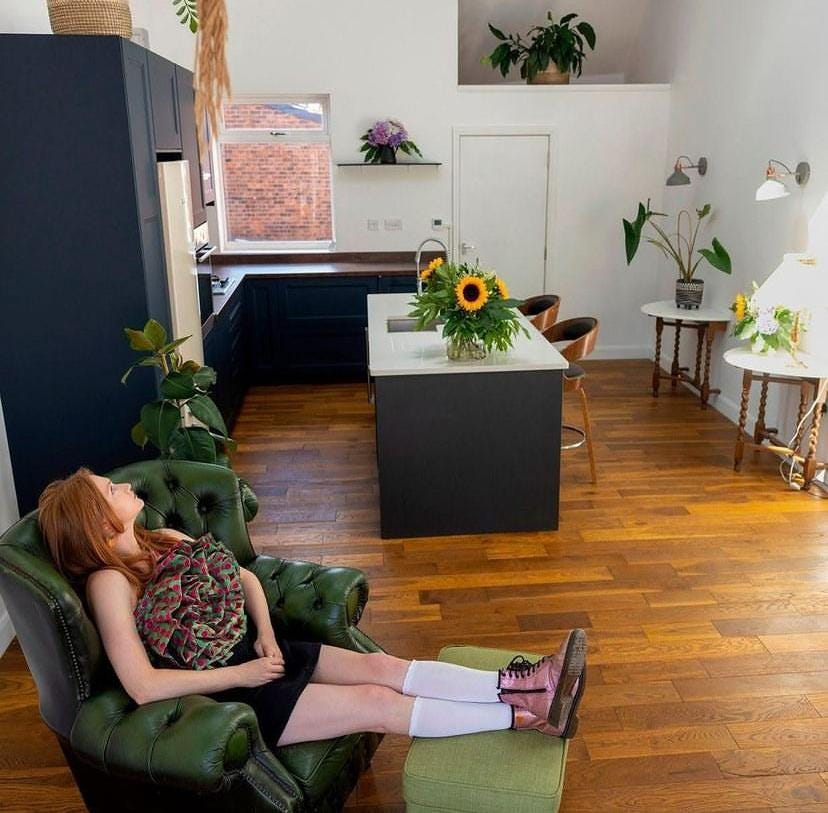
Despite all the stress and financial wrangling that the scheme entailed, this seems to be a common enough sentiment on Garrick Street. “This really was a once-in-a-lifetime opportunity, right?” Maxine tells us — she’s a resident who moved into her property in 2022 after a renovation odyssey: 27 months of plastering, painting, and putting plans into motion. An admin worker at the University of Liverpool back in 2020, she quit her job during the pandemic to dedicate her life to doing up her £1 home, setting up a blog to document the experience soon after. Like many others on the street, she didn’t want to spend masses of money hiring a building firm to deck the place out — instead, she opted to hire individual tradesmen and do some of the work herself.
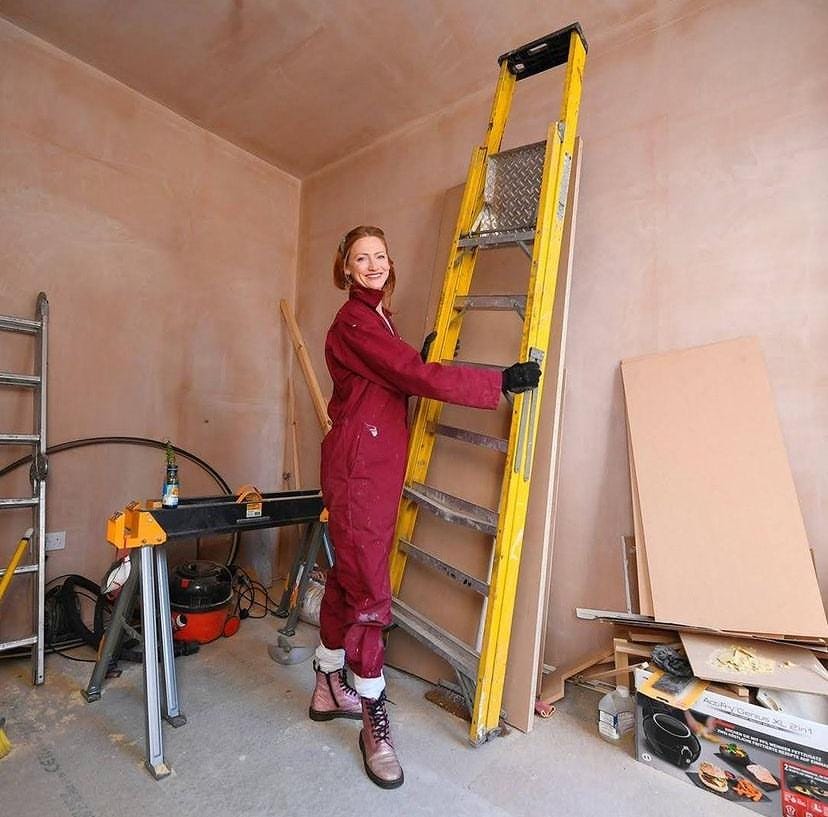
“It was a big leap, but I was really excited,” she says, explaining that she wanted to keep a record of as much of the process as possible through her Instagram and blog. Her account, titled HomesForAPound, amassed over 13k followers during that time, with Maxine regularly posting before and after pictures of the rooms in her house.
Yet she’s keen to note that the experience hasn’t been easy. “I take my hard hat off to construction workers,” she says, explaining that while she managed to do some of the smaller renovations herself — like plastering and painting — the vast majority of it was “tough work” best left to professionals.
When we ask her what she loved most about the entire process it’s the same answer nearly all the residents give: the people. “I’ve seen how this community has been created and I’ve never experienced that before, it just feels so lovely to live here,” she tells us.
The real beauty of community led schemes, says Olivier Sykes — a Liverpool-based urban geography academic at the University of Liverpool — is that those doing the building care about what is being built. “It’s not just houses, it’s homes at the end of the day,” he says — a comment that wouldn’t be out of place on a Garrick Street doormat. Who better to create them than the people who will be living in them?
Yet while the residents we have spoken to maintain the scheme was a blessing, lingering issues still emerge in every conversation. As well as the sheer scale of the work and the financial cost, the main gripe residents return to is the fact the regeneration remains incomplete (23 houses in the Webster Triangle that remain abandoned — some in a worse state of disrepair than they were ten years ago). As Steve succinctly puts it: “Some have ended up with rats for neighbours.”
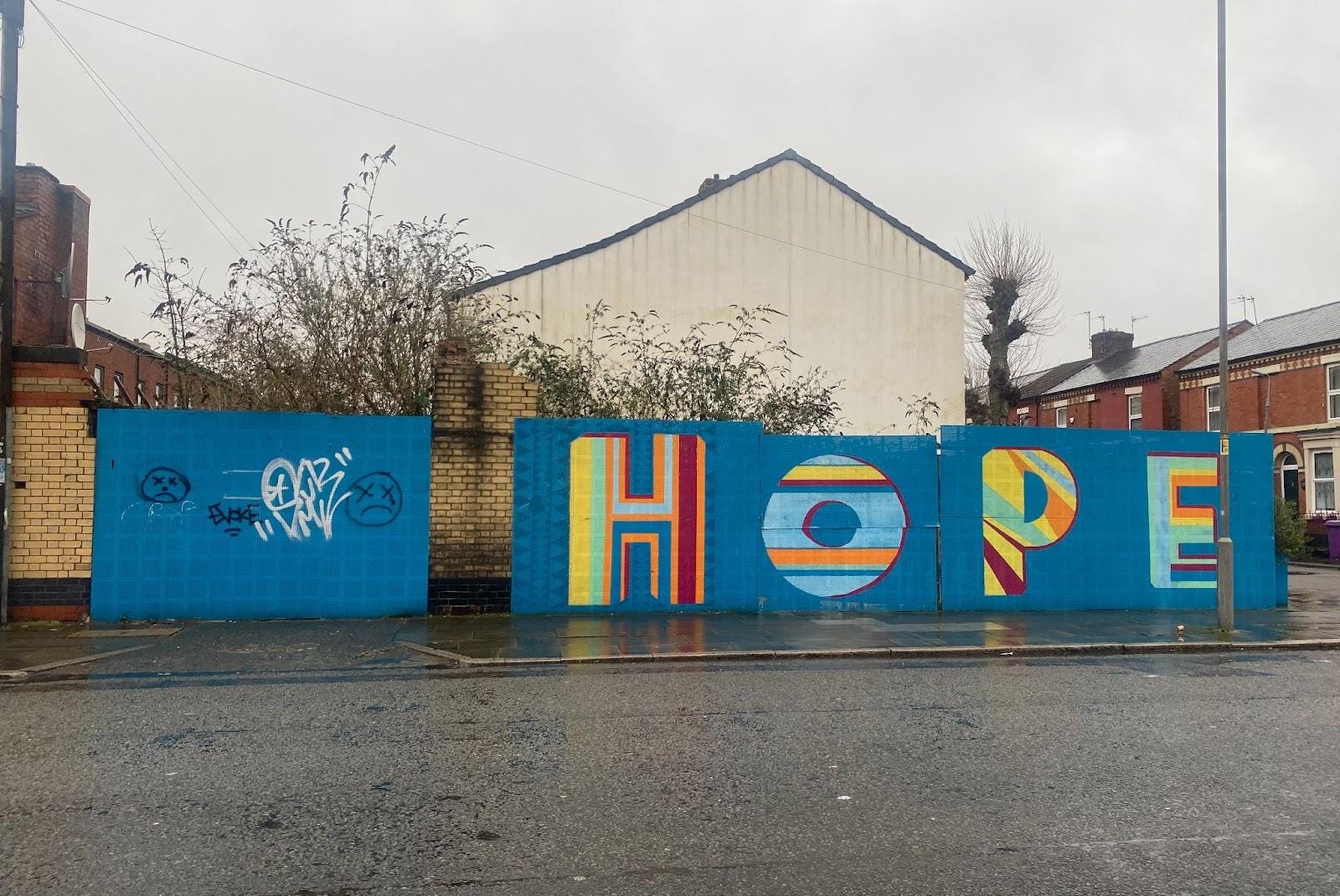
The people of Garrick Street are now so desperate for the old houses to serve a purpose that the notion of a bigwig developer entering the small self-made community has been mooted. “Anything to get them inhabited again,” Steve says, voice thick with something — frustration? Anger? “The general feeling is that it would be better if these houses were sold on to a property developer. At least selling it on could bring it back to life.”
Like Shakir, he tells us he’s contacted the council multiple times via phone and email for an update, but has received what he describes as a “political answer”. “It’s really frustrating and every time we try and get answers from the council they give the usual,” he says. That “usual” goes something like this: “We’re looking at doing something in the near future, we’re looking at options — but they’re not giving viable solutions”.
A spokesperson for Liverpool City Council told The Post that there were “many challenges along the way” during the £1 housing scheme, but the residents who transformed the properties “deserve a huge amount of praise for their endeavours, not least because they have also helped breathe new life into the community”.
“At the matching interview, applicants were provided with a copy of the building control survey, approximate refurbishment costs and a report from a damp specialist,” they told us, adding that residents were informed the report was only a “visual survey”, and all prospective buyers were advised to get their own surveys done before works commenced.
They also told us that all complaints from residents regarding the derelict houses have been dealt with quickly. The spokesperson confirmed that a number of options are being explored for the derelict houses, with residents to be informed as soon as a decision is made.
Maxine tells us she’s in the process of reviving a community interest company (CIC) previously set up by residents with the hopes of acquiring the remaining vacant properties in the Webster Triangle. She wants to renovate them, describing a scheme which could involve training and work experience opportunities for young people; a way of making the homes affordable for those who didn’t have access to renovation pots for the original £1 houses.
“It has to come full circle, it completes the story,” says Maxine, who’s in talks with the council about the CIC. “The council doesn’t have funds available. The community has to finish the job.”
A lesser woman might be frustrated. After all, isn’t this an ending that sounds an awful lot like the beginning — a problem that residents have to solve? But Maxine remains fundamentally unbothered. “I’m really excited about the possibilities,” she says, beaming.
 majorloveme