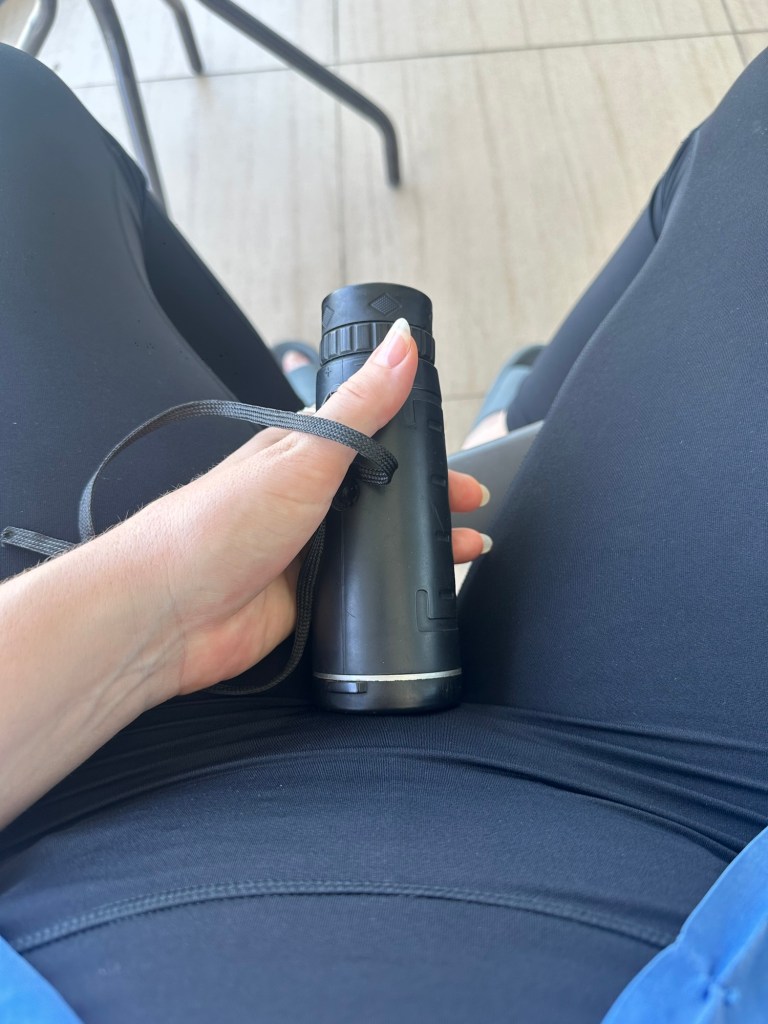
It is 7:26am on May 11th 2026. The time is known because the breakfast delivery notification has just appeared on the phone screen. Two small creams are tipped into an Americano while a monocular, carried across landscapes for almost a decade, rests against the balcony rail facing the South China Sea.
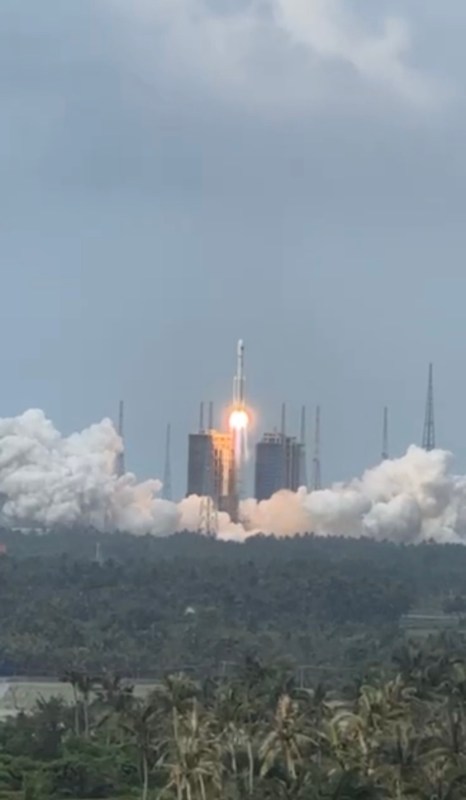
At last there is visible vapour, which guides the eyes to where the rocket has been hiding. Gotcha! The lower half of the spacecraft becomes visible through the haze. Relief arrives immediately. The launch is real! The seventy kilometre journey to Wenchang and the skipped university class have not been the result of mistranslation or stupid foreign confusion.
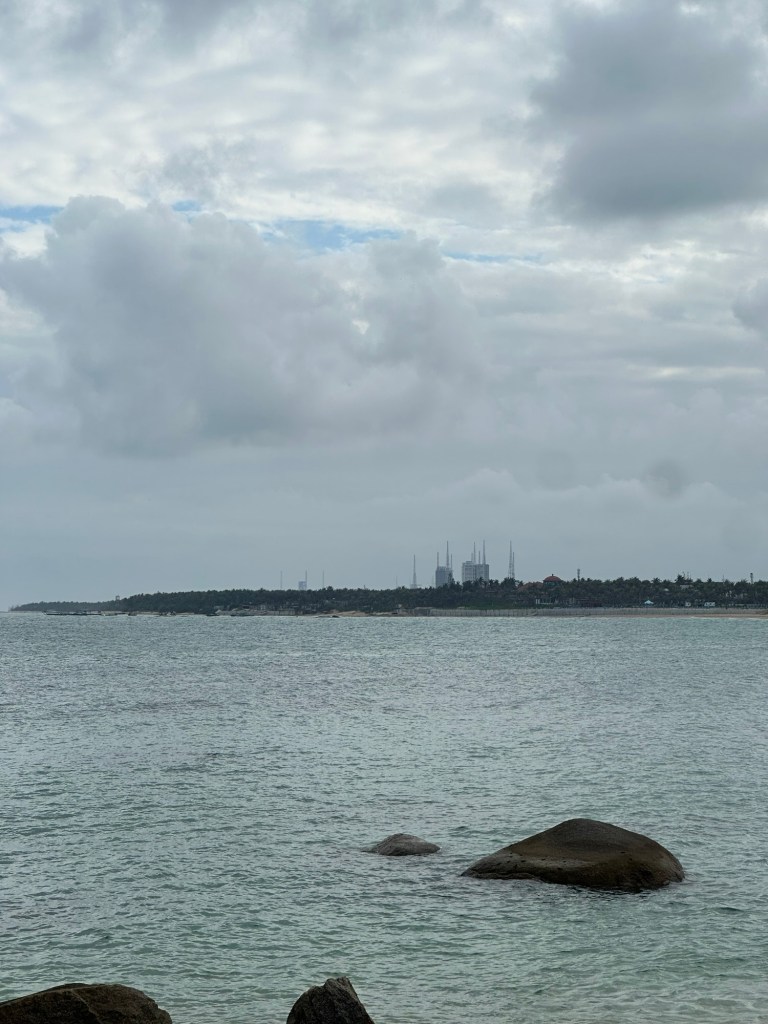
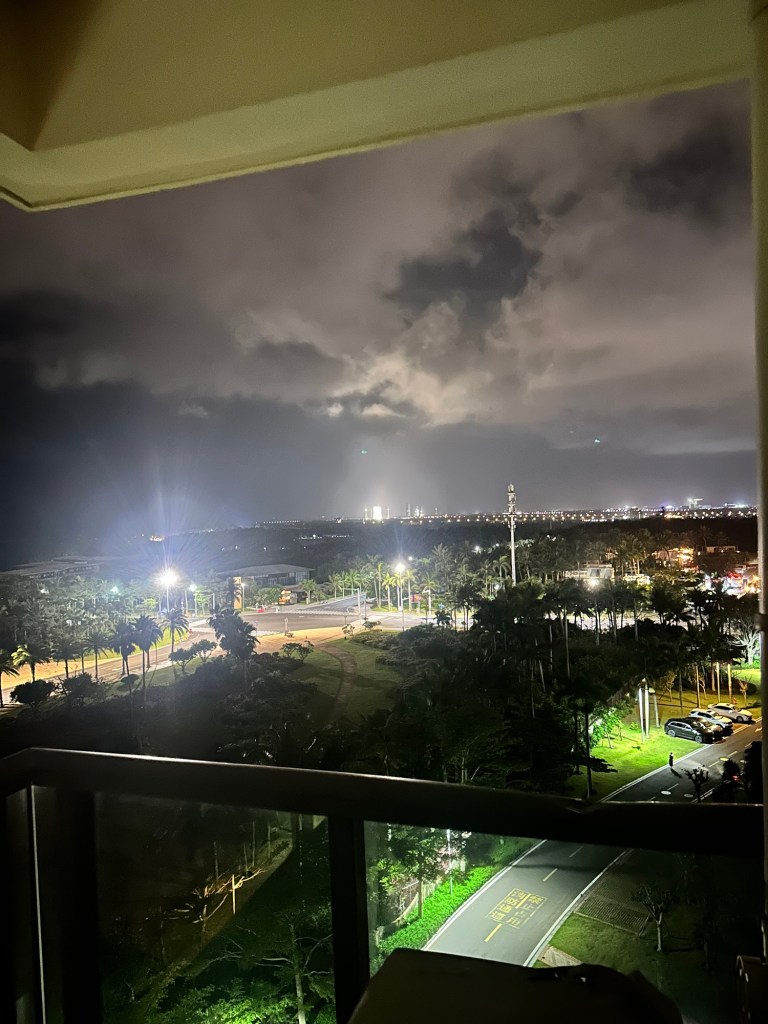
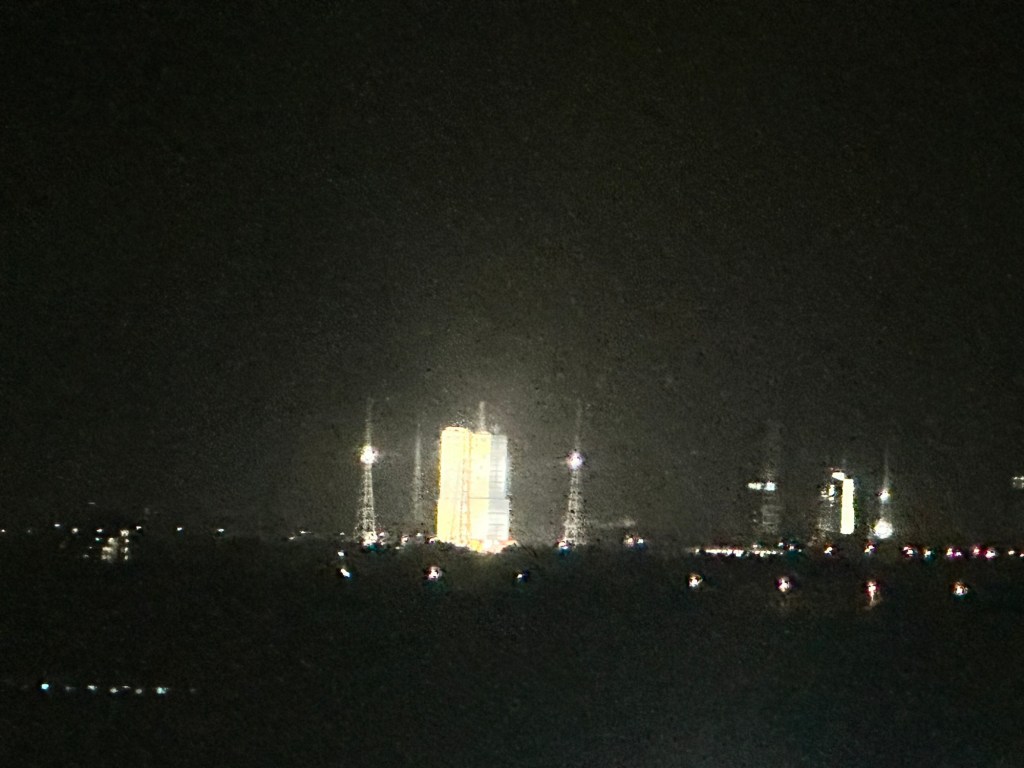
The previous night had given little indication that a launch was imminent. From the hotel balcony the launch complex looked strangely abandoned, illuminated by only a handful of floodlights. Through optical zoom it resembled an apocalyptic housing estate: three skeletal towers stripped down to aluminium shells, appearing less like buildings than disguises for machinery hidden inside them. The fear of having misunderstood the Chinese announcements lingered into the morning.
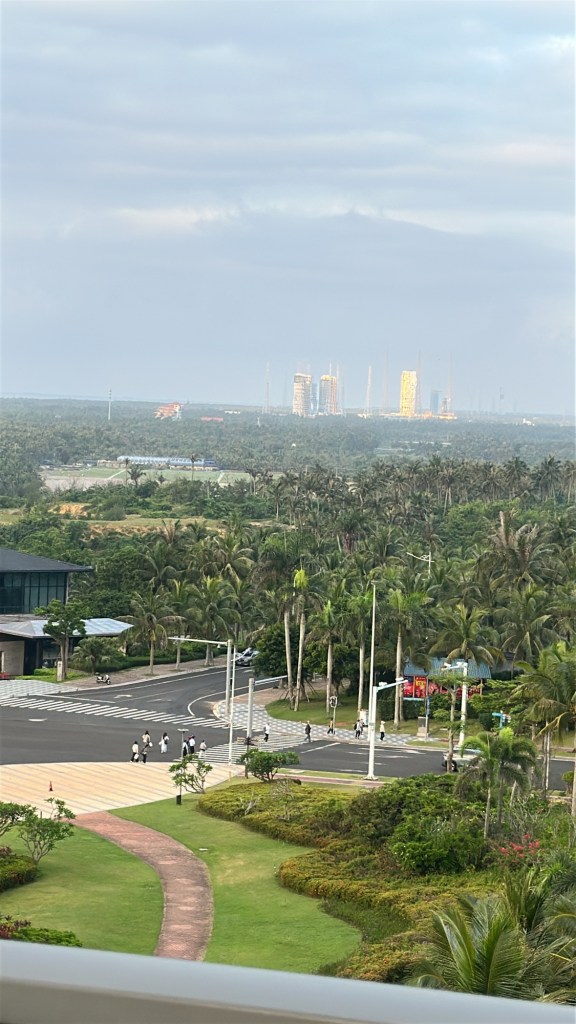
The ‘Bohemian Style Rocket Launch Sea-View Suite’ had been rented specifically for the balcony view. The sea stretched eastward, while the southern sightline pointed directly towards Wenchang Space Launch Site. A flat plane of palm trees stretched towards the launch site like a green carpet rolled out for the small proportion of humanity lucky enough to belong to a nation with a space programme. The room costs £28 on any other Monday, but today it is £97. The surcharge is accepted with the same resigned logic as paying for a full set, a Hollywood and a curly blow before a mediocre coffee date. Just in case.
As the morning haze lifted, the façade slowly dissolved. By 7:47am the Long March 7 carrying Tianzhou-10, the ‘Heavenly Vessel’, a cargo spacecraft transporting supplies towards China’s orbital space station, becomes fully visible. Perhaps The Long March is best understood not as military history but as the universal female experience of New Year’s Eve ending badly: no taxis anywhere, heels abandoned by the roadside, everybody emotionally destroyed but still walking home barefoot because there is no other option.
By 8:11am the rocket is fully visible. This seems promising, though the atmosphere remains oddly subdued. There are no vast patriotic crowds, no cinematic countdown echoing across beaches, none of the mythology attached to Cold War launches in American documentaries. The entire thing feels almost routine, it feels as though something this enormous should produce more ceremony. Perhaps modern people believe watching a launch through a phone screen is equivalent to witnessing it directly. Perhaps they are right. Perhaps it would have been more sensible to attend class.
The launch schedule is checked again. 08:12am. One minute remaining.
The monocular is steadied against a steel support beam. The image sharpens. Then, without warning or fanfare, ignition.
First the orange appears, a violent tear opening beneath the rocket. Then white plumes erupt outward, rolling across the pad in expanding horizontal layers. For a brief moment the vehicle seems motionless, impossibly suspended above the Earth, before movement becomes undeniable. Slowly at first, then accelerating with terrifying speed, the rocket lifts vertically into the morning sky. Within seconds it is already travelling faster than commercial aircraft, climbing through the troposphere towards the stratosphere.
What recordings fail to capture is the cognitive dissonance. The light arrives instantly and it is hardly believable that an explosion of that scale could be real while the body still feels safe enough to stand there drinking coffee.
‘That looks catastrophically dangerous,’ I think, but,
‘I am apparently safe enough to keep watching.’
Then the sound arrives.
The rocket is already airborne when the pressure wave finally reaches the balcony. It strikes the chest before it registers as noise. The microphone on the phone distorts violently as the air itself begins to shake. For several seconds breathing becomes strangely manual as the body tries to hold its breath. Heart rhythm falters and the hands tremble.
Then instinct takes over and the monocular is lowered in favour of filming. Camerawoman never dies. The camera tracking fails almost immediately. For the next ten seconds one of the most technologically sophisticated machines ever built is watched indirectly through a screen while it disappears into cloud. The absurdity of this is difficult to ignore.
Roughly thirty seconds after ignition the rocket vanishes completely, by which point it is travelling at several thousand kilometres per hour. Within two minutes it will have left the troposphere entirely. Within around eight minutes it will effectively be in space, more than one hundred kilometres above Earth and travelling fast enough to remain in orbit. Yet the sound continues long after the vehicle itself has disappeared.
For almost five minutes the atmosphere carries intermittent low frequency roars back across the coastline, as though the sky itself is still adjusting to what has just passed through it.
Then silence.
What remains afterwards is complicated, awe and pride mixed with shame that the same technology can inflict so much damage.
The rocket itself felt embarrassingly masculine.
Yet the same species capable of inventing war had also engineered a machine sophisticated enough to deliver a space treadmill to people floating hundreds of kilometres above the Earth.
How thoughtful!
Perhaps men should be allowed rockets in the shape of penises, provided somebody sensible remains in charge of where they are pointed.
Watch the short here.




Watch the full video on Youboob

