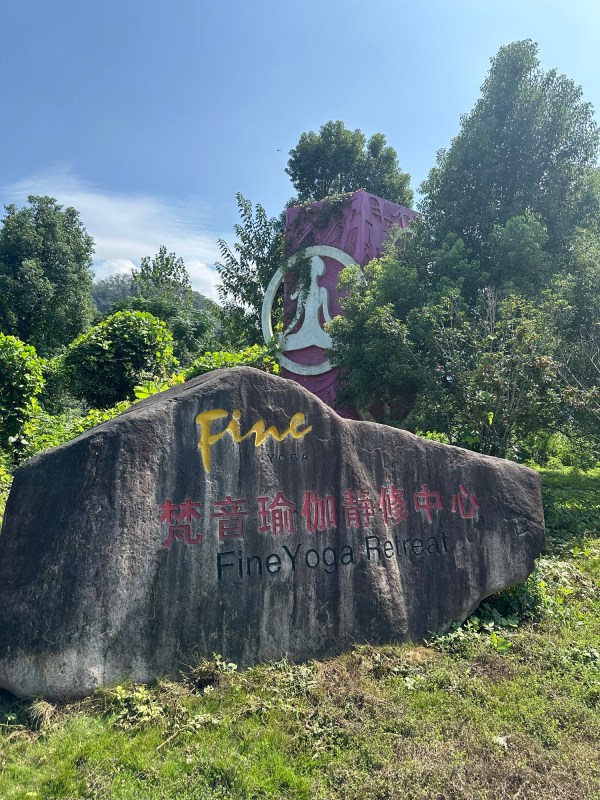
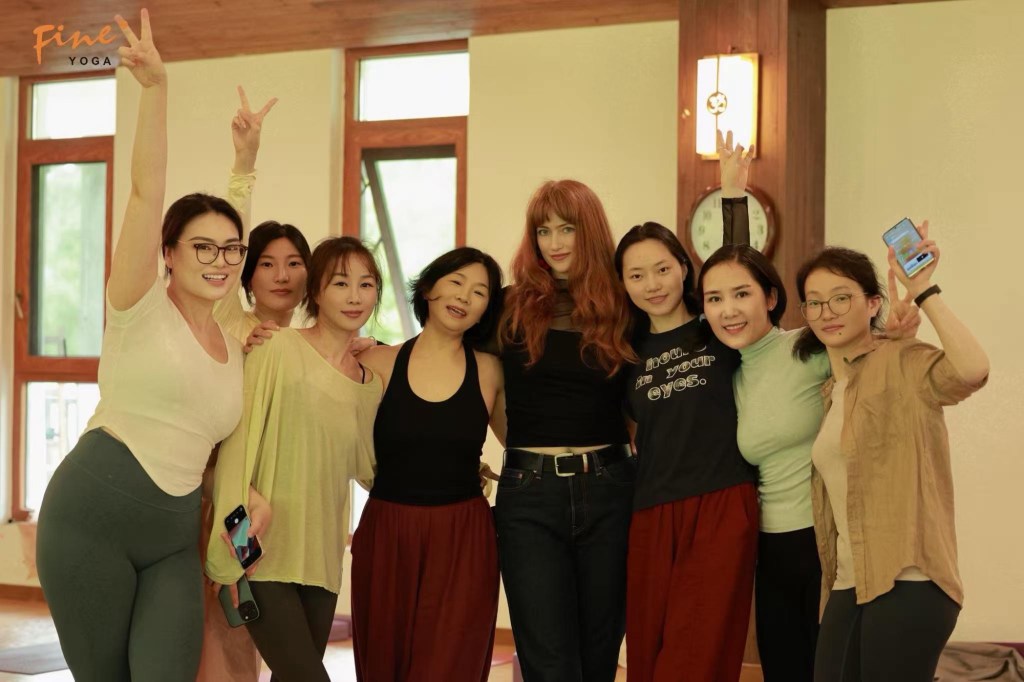
Fine Yoga is not an appraisal of my yoga teaching over the last six years, but the name of my beloved retreat centre in Wuhan, China, where I am writing this from.
The name makes me laugh because it refuses to oversell itself. Not Transcendental Lotus Awakening Yoga. Not You Will Journey into Higher Dimensions Yoga. Just Fine Yoga.
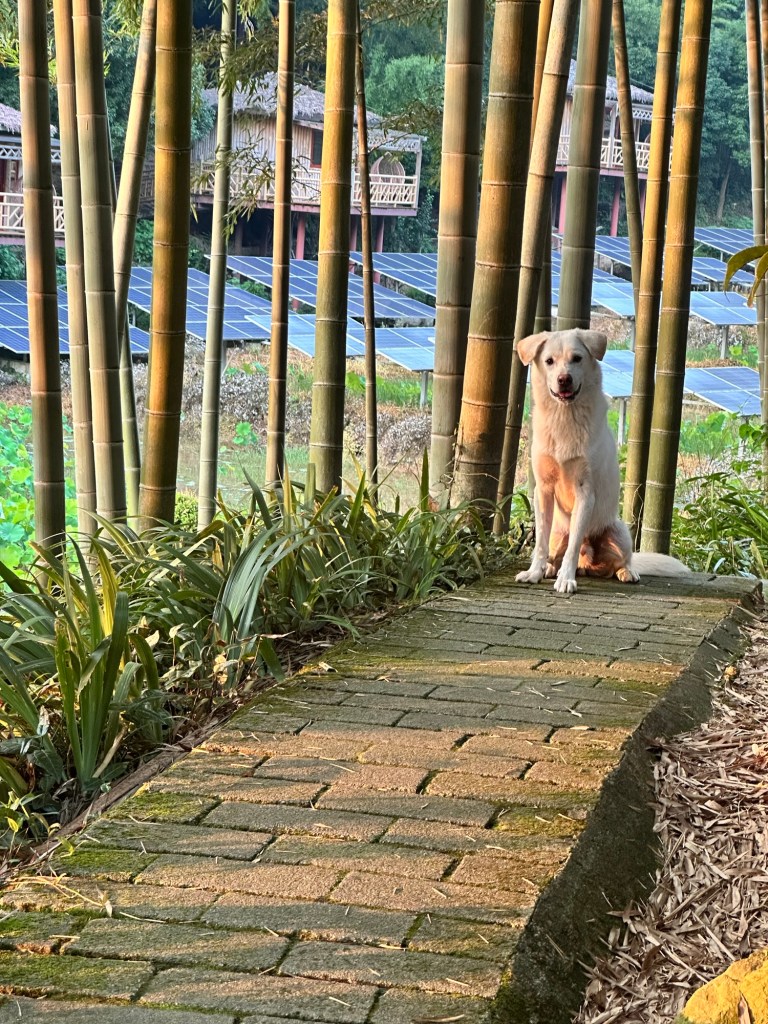
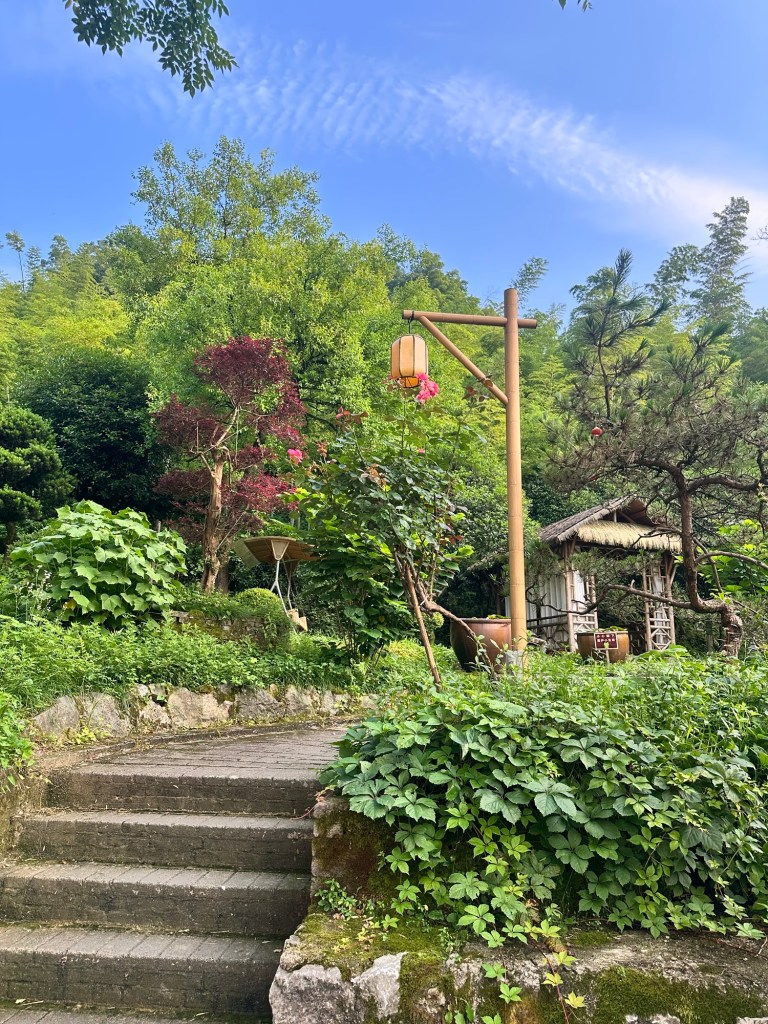
It sits in a valley flanked by bamboo, where run off from the surrounding hills keeps a pond filled with fish and tortoises. The place is intense, beautiful, bankrupt, and full of women.
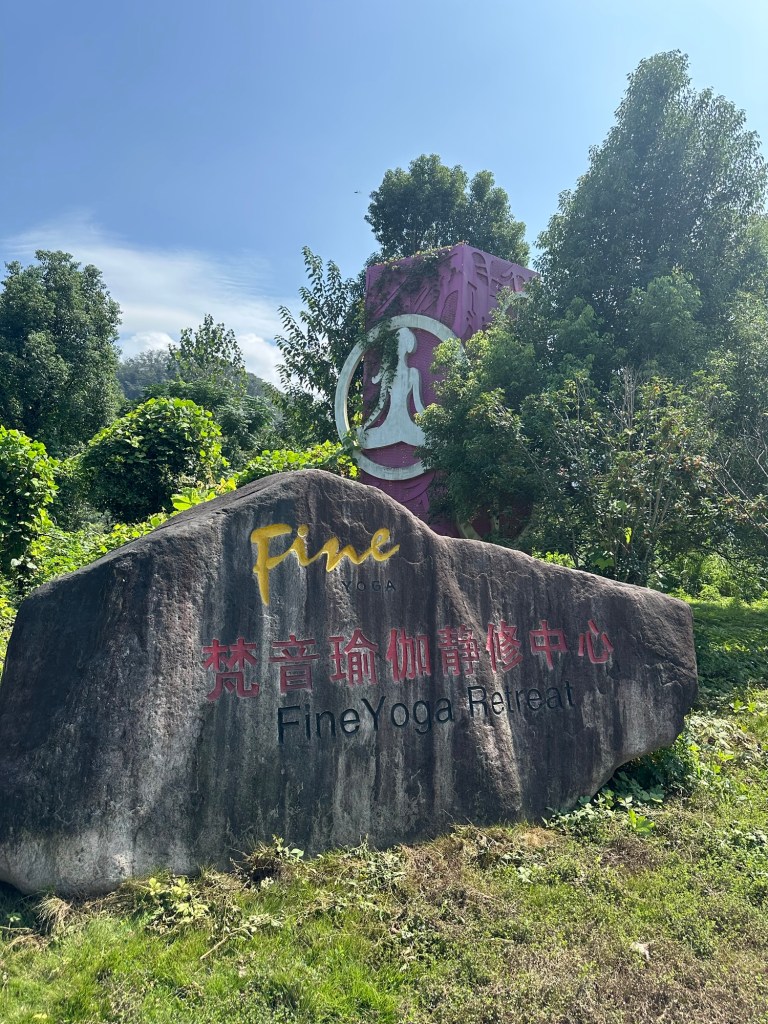
The Chinese name translates roughly as ‘spirit refurbishment centre’, which feels much more accurate. You do not come here to relax. You come here to be dismantled, fed vegetables, shouted at in anatomical Chinese, woken by frogs, made to learn Sanskrit with a Chinese accent, and kept damp.
I have been living in China for the past nine months. With my return to the UK now imminent, I decided to spend my final weeks here doing an Ashtanga teacher training course in Chinese, as if my life was not difficult enough.
Four Hours’ Sleep and Four Women to a Room
I would never usually agree to a shared room, but funds were low and I had mentally prepared for it by staying up the night before with my American classmate, Lance Armstrong. Not the cyclist. My flight had been early, so by the time I arrived I was running on about four hours’ sleep.
Still, never assume that because a woman has no eyes, she cannot see.
Since leaving the comfortable clutches of my previous employment as a yoga coach in the UK, I have seldom attended yoga classes in China, on account of them non consensually photographing me with bizarre Chinese beauty filters.
My practice over the last nine months consists of my sun salutations, which take all of three minutes each morning and allow me to maintain the fiction that I am still a disciplined person.
My dormitory contained two women older than me and one younger. That night, I learnt that all of the women had either never had an orgasm or does not know what one is. So now, apparently, it is my job to explain this to them. Not physically, before anyone gets excited. I mean spiritually, linguistically, educationally, a sort of burden of international sisterhood.
When Language Mistakes Have Limbs
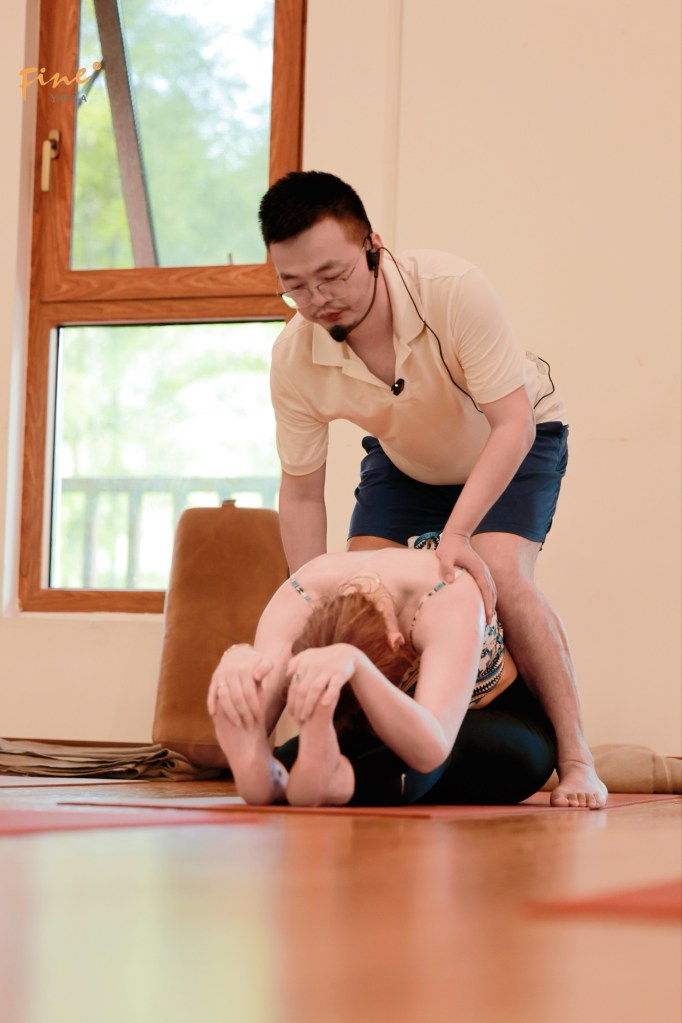
The first time I came here, in 2019, it was almost unbearable. My Chinese was so limited that six hour days of constant anatomical instruction made me want to cry. It was not ‘hello’, ‘how are you’, ‘where is the station?’ It was pelvis, sacrum, posterior tilt and internal rotation of the shoulder joint.
This was pre AI. There was no pointing my phone at the board and waiting for a little robot angel to translate the sentence into English. I had to decipher the teacher’s handwriting myself. A character I thought I knew in a book became almost unrecognisable on the board.
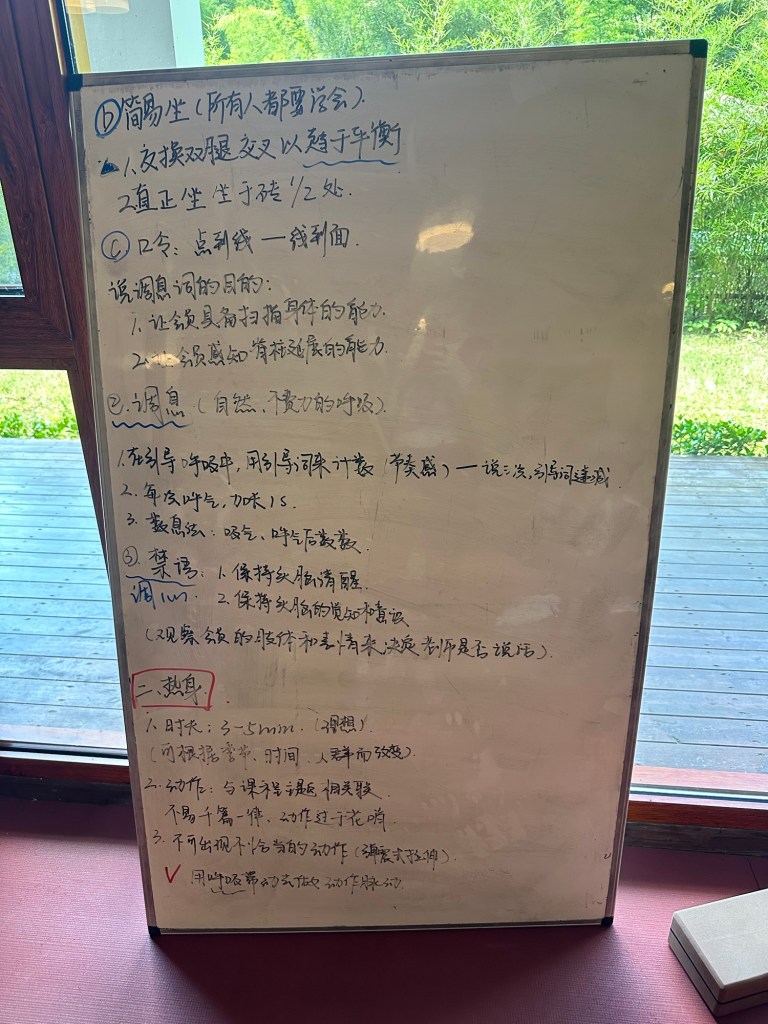
By the time I understood one word, the class had already moved on.
It was not enough to read the word, guess the character, remember the sound, and drag the meaning out of it. I then had to turn it into movement on someone else’s pelvis, shoulder, rib cage, thigh, spine.
And now the terrible thought that I was allowed into the wild to teach yoga: How many innocent shoulders have I led into the wilderness because I thought I understood a word that actually meant something else entirely?
There is a particular horror in realising that your language mistakes have limbs.
So here I am again, tired, sweating, trying to learn Chinese, trying to learn yoga, trying to understand anatomy, trying not to cry, trying not to be looked at, while also being constantly looked at.
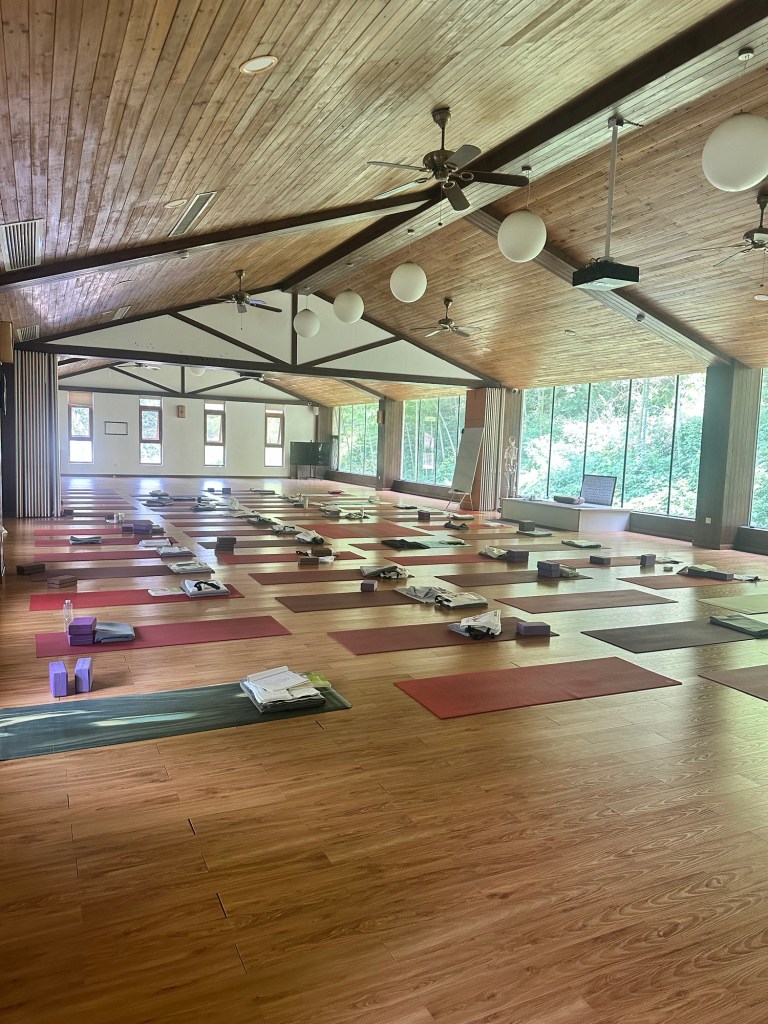
I write this as a sweet little hostage note to the future: Maxine, do not do this again.
Women Watching Women
The women are overbearing. The flower in my hair, my earrings, my socks, my water bottle, everything becomes available for comment. It is not always malicious, often it is curiosity mixed with comparison and constant scanning of other women for things to copy, judge or correct.
It makes me feel less like a person than a collection of details. Each time I come here, it gets easier, but it still feels like I am swimming against the tide.
I am not innocent either. I objectify women frequently. During a demonstration, a female classmate’s body shape is processed before her voice. A man steps onto the mat and I barely notice what he is wearing.

Then my roommate tells me, ‘We Chinese women do not go out without a bra.’
I decide to translate the roommate’s comment as: I admire your defiance, but I cannot permit myself the same freedom, so I will make yours uncomfortable. The insecurity reveals itself in constant online shopping: women scan the room, then packages arrive at reception under a long list of names, each containing another approved version of individuality.
My language, which is its own form of bondage, is too limited to ask why my breasts bother her so much, or why she feels responsible for correcting them.
One day I went braless and one of the two male students lost control during Matsyasana, buried his head between my breasts and became trapped there. The class had to adjourn, everyone tutted and rolled their eyes at me and wait outside until he recovered.
‘This is the second time today, Maxine. Wear a bra, for goodness’ sake.’
Soon I would be warning other women to cover themselves, and there I would be, doing the policing for them.
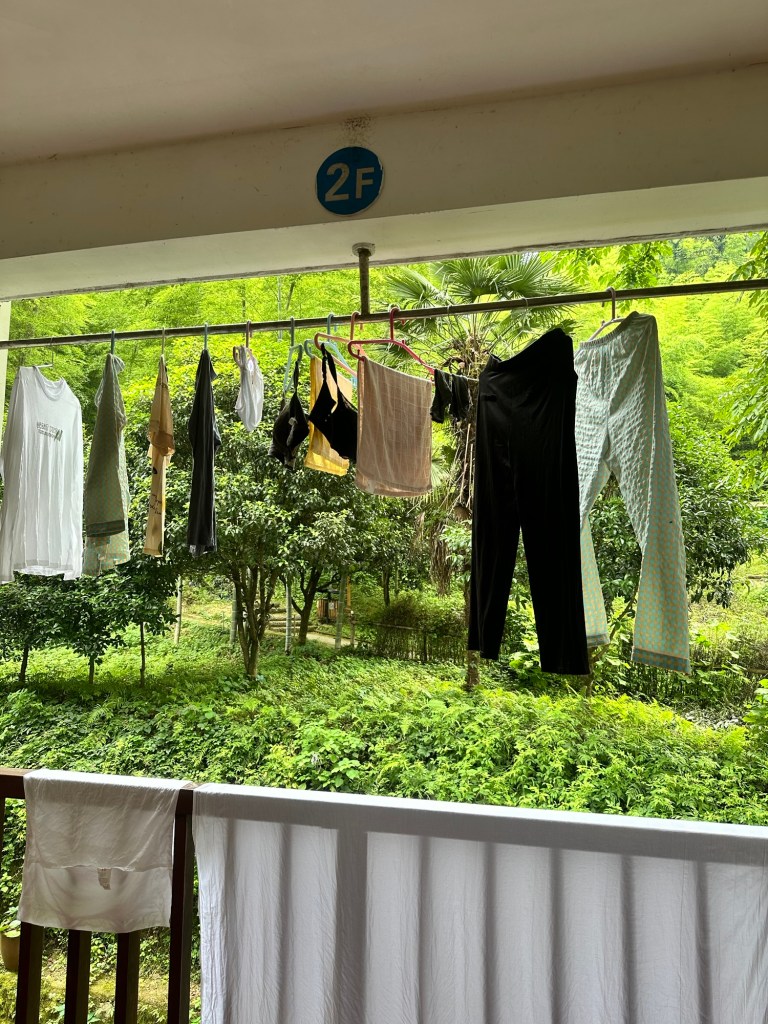
Of course, this is an absurd hypothetical. Men are not rendered helpless by an unsupported breast. Yet women here are still trained to behave as though male self control is our administrative responsibility.
Ling Ling
I am more than halfway in and I have taken the afternoon off from having Chinese rain down on me. I am eager to finish this piece here, in this environment, with the rawness of the social lashings I am getting. However, to say I have not made any meaningful connection would be a disservice to Ling Ling, a Chinese onomatopoeia and my older sister here.
I attended the 6:45 Ashtanga Vinyasa class this morning and did so many kick backs that if anyone tells me you cannot be fatter and fitter, they can stand behind me and find out. But what I want to tell you is about Ling Ling’s cute voice in English. Her sweet words, her temperament and her book club, which I joined. I want to tell you how blessed I feel to be the first foreigner she has ever spoken English to.
She wants to know more about me, and I want to know more about her. I see someone soft voiced without being weak. Disciplined without being dead inside. At 62, she is still learning, still open.
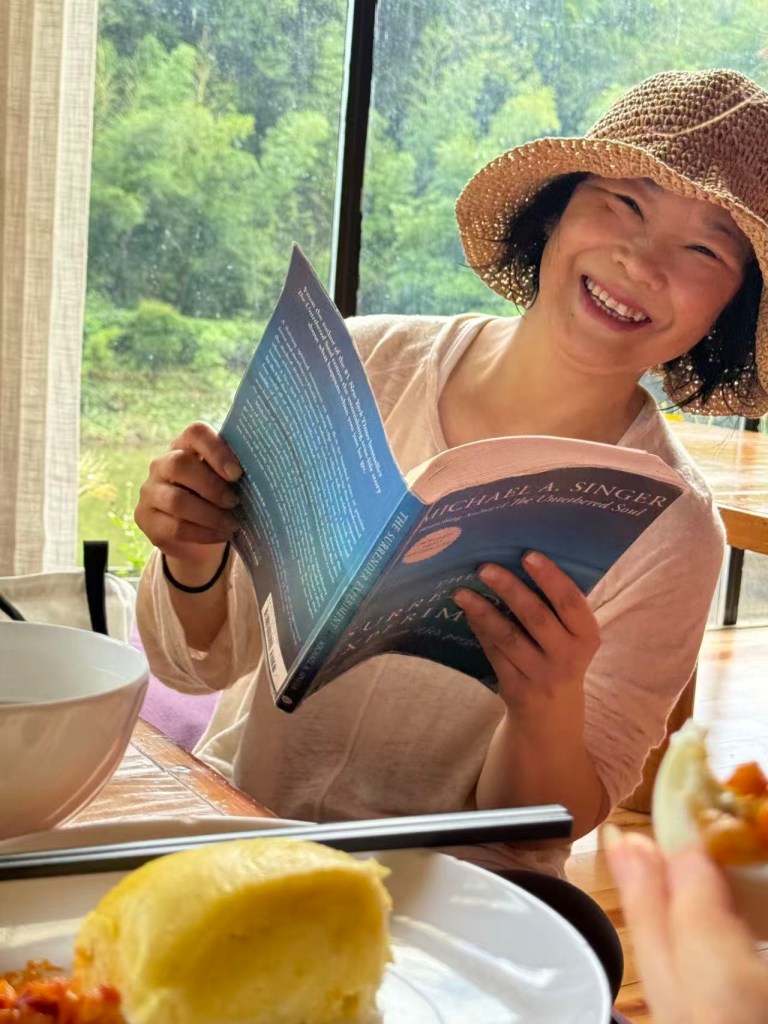
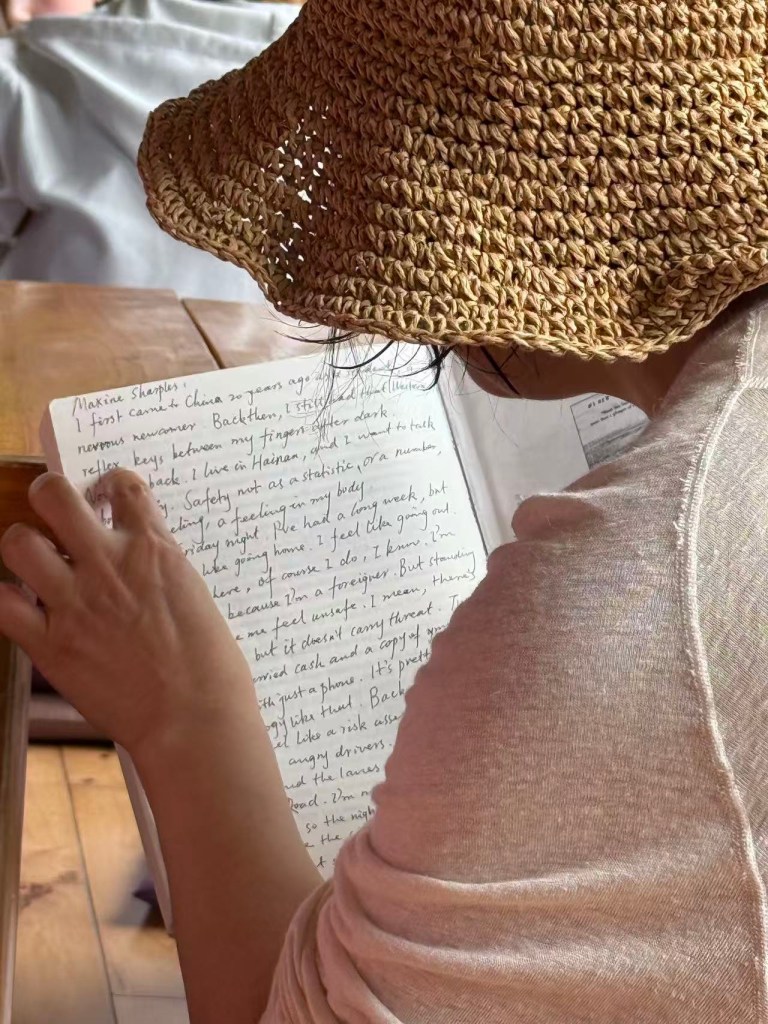
This sounds simple until you understand what that means for women inside a marriage in China. During the retreat, her husband complained about his back. The expectation was clear: she should leave, stop the course, go home and stand beside the sore back like a loyal little ornament of concern.
She did not. She told him to go and see a doctor. She also did not tell her children because she knew they would persuade her to go back. Her husband did not speak to her for days. Ling Ling remained where she was.
He came round eventually and deserves some acknowledgement. Many men, when they begin to lose control over their wives, react badly. They gaslight and punish. They withdraw affection. They make the woman suffer in the hope that, if her confidence erodes enough, she might start to believe she is no better off without them.
Or they can grow together.
Ling Ling’s story is one version of the future. A woman deciding not to abandon herself because her husband has a sore back. A man sulking, then surviving. A marriage evolving because the woman inside it stopped being defined as mum, wife or daughter in law, and became Ling Ling: the woman with strong shoulders, a curious mind and a little straw mushroom hat that lights up my world every time we meet.
The Marriage Machinery
Another woman told me a story from further down the marriage machinery: a forced abortion at five months pregnant because the child was the wrong sex. Daughters measured as disappointment before they even breathe.
Sons. Bloodlines. Inheritance. Names. Land. Pride. All the usual nonsense.
Patrilineal inheritance has always seemed absurd to me because you can never really be sure who the father is. But men have taken it too far and built a whole civilisation on the one parent you cannot prove without a test, then call women feminists for talking about the absurdity of it all.
The breast must be covered because men might look. The wife must return because the husband has a bad back. The daughter must disappear because the family wanted a son.
Different decades, different levels of violence, but the same assumption underneath: a woman’s body is not entirely hers.
And yet here we are, in a yoga room, with women over forty and sixty and beyond, learning Sanskrit counts, laughing at pronunciation, going on retreats, refusing to go home, joining book clubs, discussing philosophy, surviving what should have destroyed them.
Maybe this is why this place affects me so much.
It is not an escape from the world, it is full of the world. The whole ridiculous, cruel, funny, tender world is here in fekin Lululemon leggings.
The Surrender Experiment
Our exam was to learn all five parts of the sequence and without knowing which section we would be asked to perform. I had to memorise Sanskrit and Chinese while also understanding the meaning in English, otherwise I was just making noises with a foreign accent.
During book club we were reading Michael A. Singer’s The Surrender Experiment. The passage I was given to translate concerned a man mistakenly entered into an exam he had not prepared for. Instead of trying to escape, he watched his excuses forming, his fear of judgement and the sudden importance of how he appeared in other people’s eyes.
I nearly laughed because it was exactly what I had been doing. I had already decided the exam was unfair and begun looking for ways out before the test had even arrived.
That afternoon, the teacher picked my row. I was assigned the breathing and Sanskrit counting, technically the easiest part, until the woman beside me began laughing uncontrollably during her script and I had to take over.
I finished her meditation, performed my own section and received a round of applause.
I realised that I am a designer, I like arranging spaces, but thoughts and feelings are less obedient. I like control, and in a society where a woman’s sanctioned outlet for that instinct is often a child, husband, dog or cat, I have none of the approved vessels so I turn it on myself.
I lack both the skill and the consistency required for perfection, but this has never stopped me expecting it from myself. Every imperfect result therefore feels less like the predictable outcome of being human and more like a personal failure.
I had decided in advance that I would surrender to whatever happened. But deciding how I would enter the moment was still an attempt to control it. You cannot be present while trying to remember the attitude you promised yourself you would wear.
When the woman beside me began laughing and I had to take over, there was no time to design the moment. I simply entered it. Perhaps that is what surrender means: not becoming calm, wise or fearless, but remaining present when the scene refuses to follow your plans.
Lost on You
I am finishing this while trapped on a plane at Manchester Airport because a live bird is stuck inside an overhead compartment. This seems as good a place as any to end.
Every piece I write here turns towards unfairness, and at first I think I have gone off course but maybe unfairness is the course. Maybe this is what happens when women are put together in a room and asked to breathe. Eventually, somebody exhales the truth.
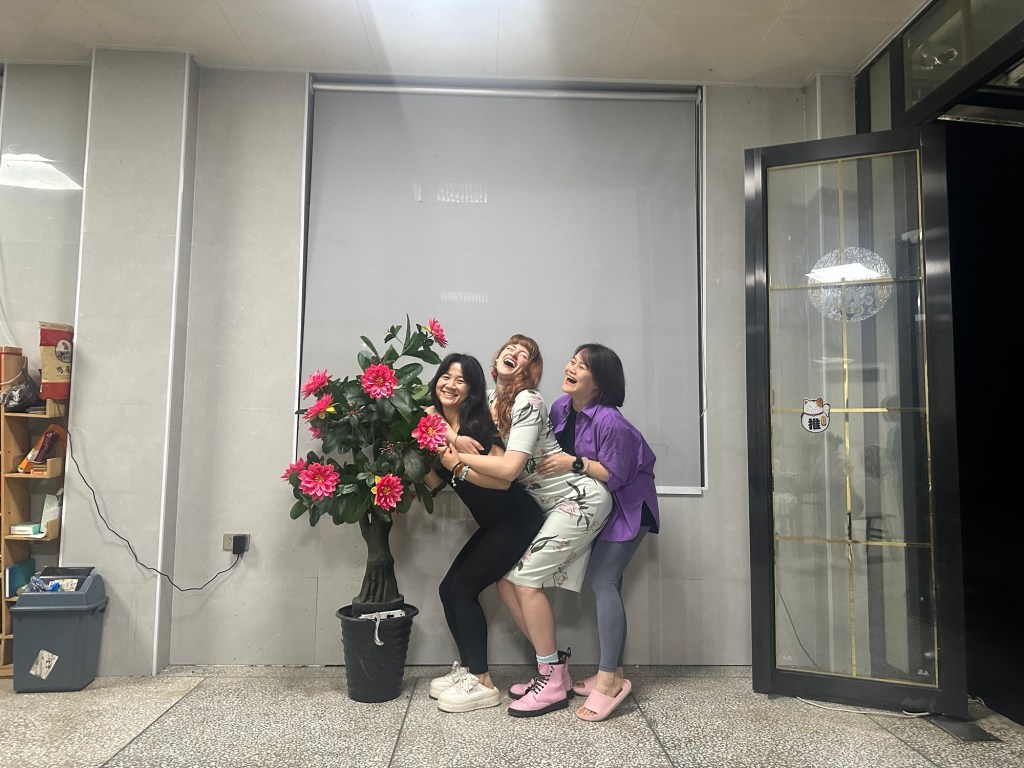
By the final day, small things had shifted. A classmate thanked me for telling her that thin did not mean beautiful. Another held my hand beneath a blanket after our strange little lesson in female anatomy. A third, who had questioned my refusal to wear a bra, had stopped wearing one herself. Ling Ling wrote that our friendship had helped her understand spontaneity and authenticity not simply as words, but as ways of living.
I feel the aftershocks of patriarchy, but nobody admits there was an earthquake. There are no damages, restitution or reparations because there has been no admitted liability.
So the history of women must still be taught by women to women, passed hand to hand, body to body, story to story, because the official version keeps redacting the details.
Meanwhile underneath a blanket, women are already changing.
Later, my roommate wrote in Chinese
‘原来暖意不需要翻译‘
It turns out warmth does not need translation.


Thank you so much for taking the reader on your journey. It was a brilliant read!
LikeLiked by 2 people