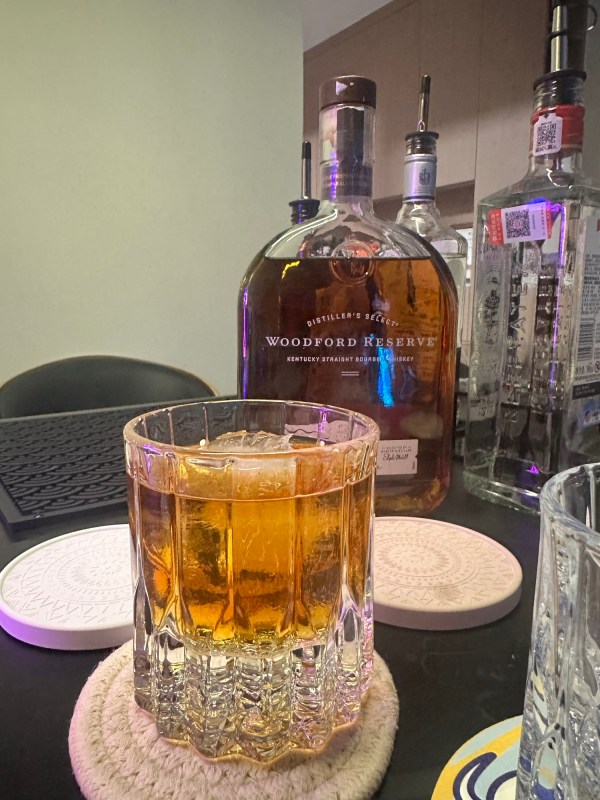
Here is a poem that only rhymes if you can speak Chinese. I wrote it in a bar.
细妹子丢杯子
不停地上课真不公平,
down the squat toilet, I lost my thumb ring.
学校里什么都不想吃,
让我很不快乐。
ChatGPT 让我迷路了,
司机也没送我去要去的。
一个人去了一个酒吧,
本来想去一个饭馆儿。
戴着降噪耳机看视频,
吃到汉堡很开心.
酒吧是为男人建的,
so they can’t ignore my gender.
我的孤独是他的责任,
所以我玩儿了一点点。
我想象自己在钓鱼,才想起来我只吃菜菜,
怕会钓到鲨鱼,我一转身,说 bye bye.
那夜我被梦里大声的笑声笑醒,
a man back home I did not bring.
渴得醒过来,杯子说成被子,真奇怪,
I lost my bottle twice in one night.
End.
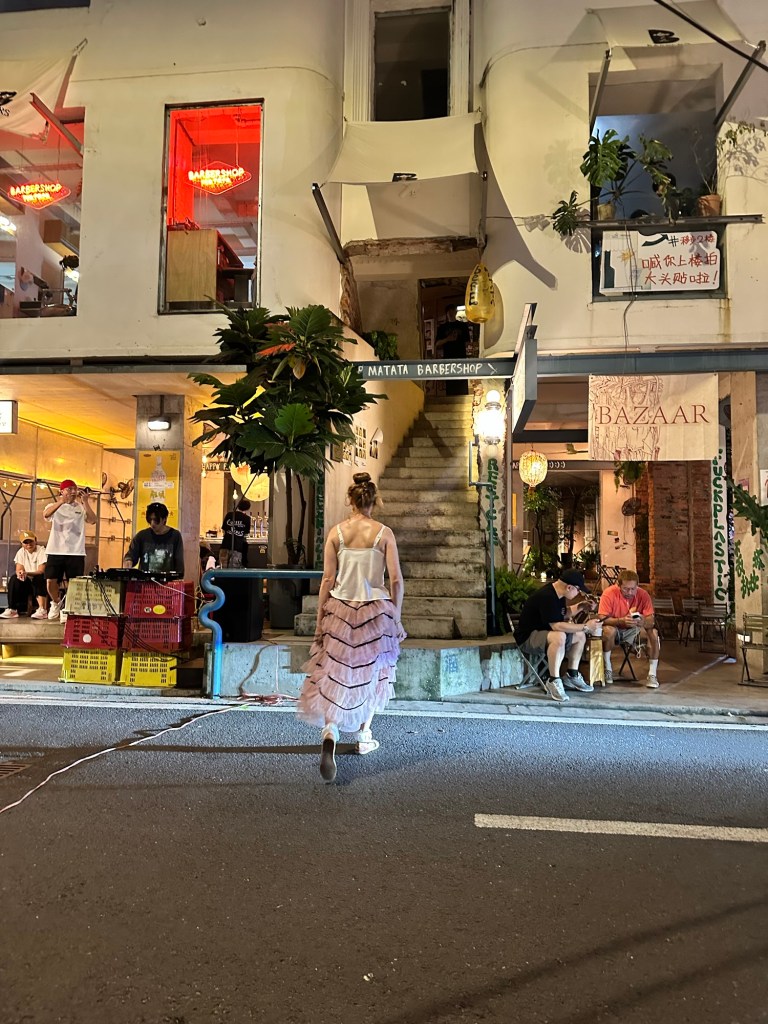
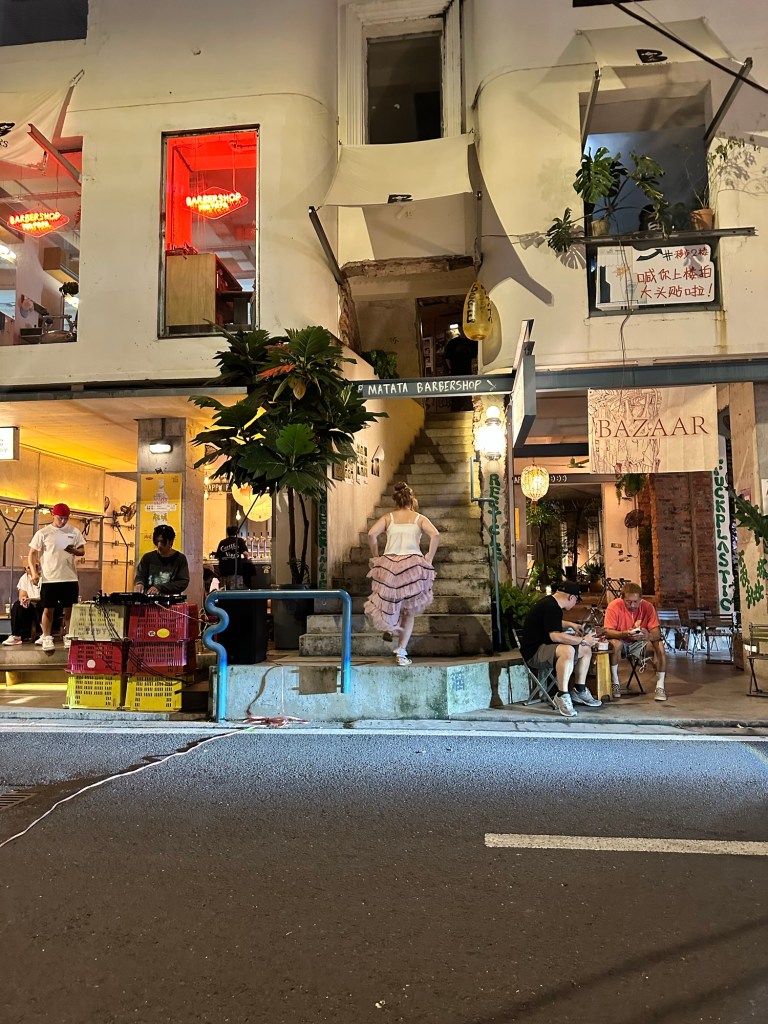
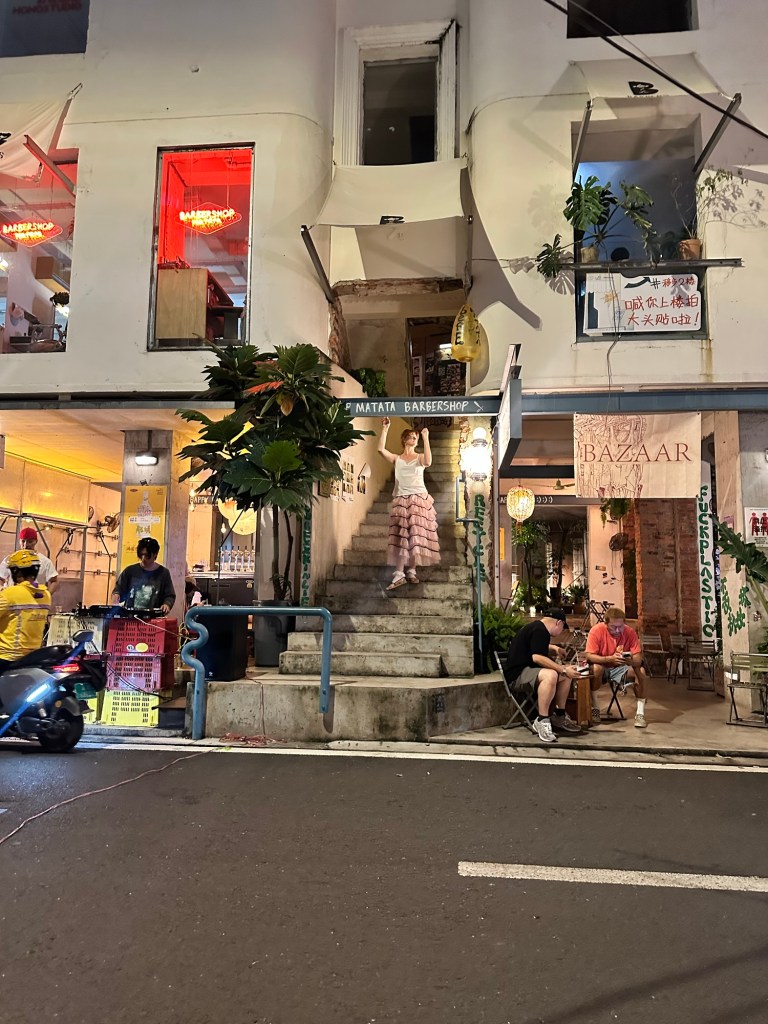
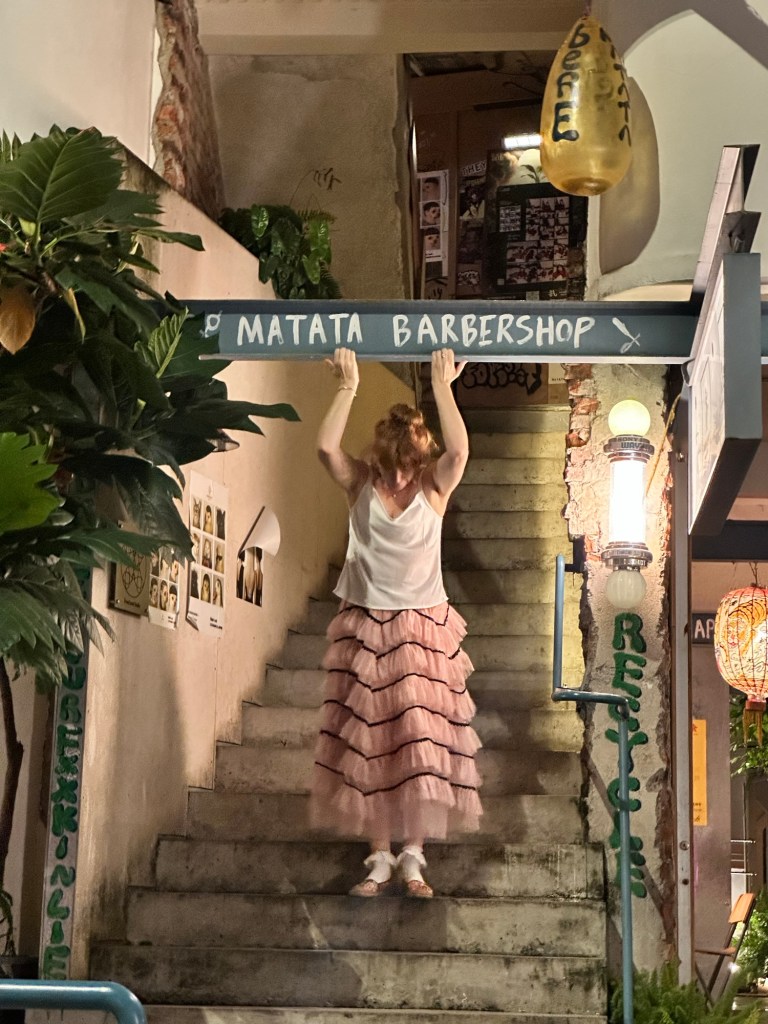
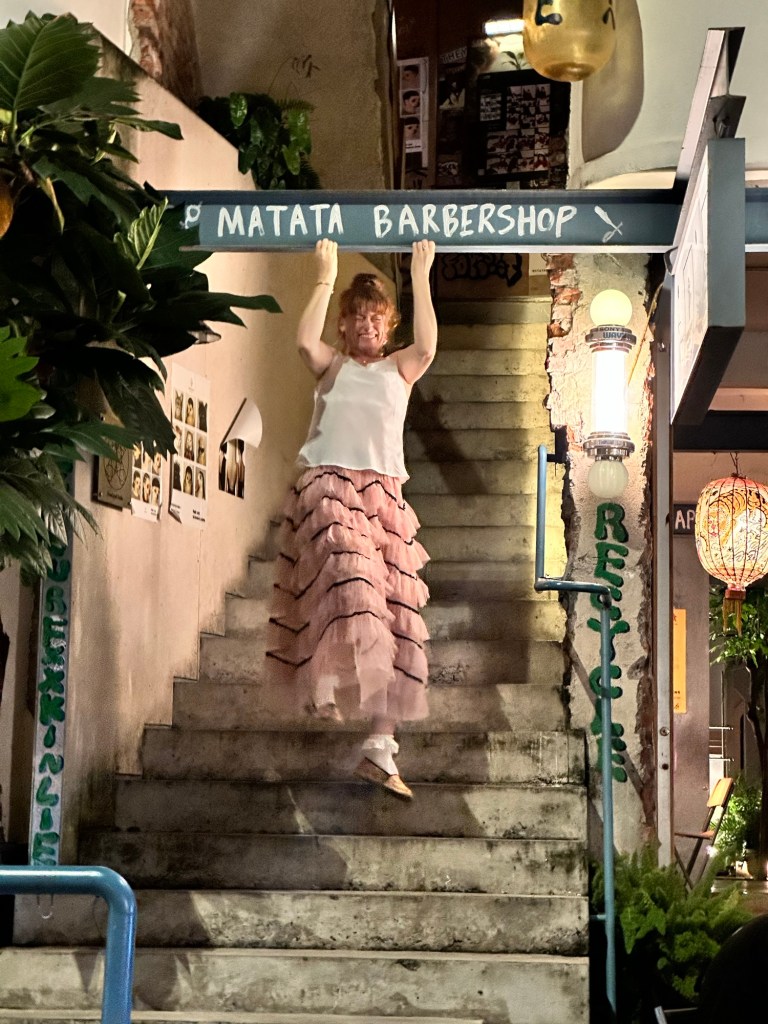
There is a whole spectrum of bars. At one end, the sports bar. Further along, hotel bars and those dimly lit speakeasies, there are even barbers.
The bar was likely established by a man, or several men, refurbished by men and possibly even upholstered by men. The space was designed by men, for men. But why do men exist? Well, for women, of course.
That doesn’t mean the space isn’t comfortable for women. Quite the opposite. Soften the lighting, improve the seating, add a few cocktails, and before you know it, you’ve got somewhere women might actually want to spend an evening. But the structure hasn’t changed. We’ve simply made ourselves more comfortable inside it.
A bit like patriarchy, really.
We’ve entered institutions built by men, changed the furnishings, invented the kitchen island and congratulated ourselves on the improvements, which have undoubtedly been enormous, although the foundations remain much as they were. I’m not suggesting we abandon the building, because I rather like the bar, but perhaps it’s time women had a say in the architecture, not just the decoration.
Anyway, there I was, sitting inside the patriarchy, enjoying an Old Fashioned. Bourbon, sugar and bitters. A rather appropriate drink for contemplating the history of women.
China and England are different in so many ways. So are countries across Europe, Africa and the Americas. Different languages, cultures, customs and histories. Yet there is one rather extraordinary thing we women have in common: the historical subjugation of women. That is something I share with my Chinese sisters.
We also share something else. Our remarkable absence from the historical record.
Of course, working-class men have been excluded from history too. Their lives and labour have often gone unrecorded, their achievements credited to others. But women have also been excluded because they were women, across classes, cultures and centuries. This is why I cannot accept the argument that class oppression affects men and women in the same way. A poor man and a poor woman might share economic hardship, but the woman also lives within a system that has historically given men power over her body, her sexuality, her labour and her choices.
Gerda Lerner went further. In The Creation of Patriarchy, she argued that the subordination of women by men provided the conceptual model for slavery as an institution, while the patriarchal family provided its structural model. Just consider that for a moment. What if the domination of women was not simply another consequence of inequality, but one of the earliest models from which other systems of domination developed?
Class matters enormously. But class alone cannot tell the whole story of women. Neither, apparently, can the men who wrote most of our his story.
Here in China, where I live, I see something particularly exciting happening among young women. Women are studying, reading, questioning and discovering their own history. They’re talking to one another about what they’ve learnt, often through social media. And some of those conversations are being silenced. Feminist accounts have been censored or closed for supposedly encouraging division between men and women.
But women are describing divisions that already exist, not inventing them. To tell women that recognising and discussing their historical oppression is itself the cause of conflict is gaslighting in its essence. What happens when women describing structural inequalities are understood primarily as creating conflict, rather than as producing knowledge about their own historical condition?
And yet, despite all this, I am enormously optimistic. Look at what women are doing! We’re entering professions we were once excluded from, studying subjects we were told we couldn’t understand, and taking positions of authority that were historically reserved for men.
Look at Rwanda, where women hold nearly two-thirds of the seats in the lower house of parliament. Women who were once excluded from political decisions now make up the majority of the people making them. And education! The possibilities that open up when girls and women can learn, earn, question and participate fully in society are extraordinary. Educating girls is one of the most powerful ways to improve economic opportunity and reduce poverty across generations.
For most of history, women have been denied the opportunity to participate equally in the making of knowledge. Now we’re not only participating, we’re questioning the knowledge itself. Not just history written by men, about men. Women’s history. Our history. I don’t mean that everything men wrote was wrong. I mean that when half of humanity is largely absent from the telling, we have been given only half the story. And what an exciting time to discover the other half.
Historically, solidarity between women outside the family has not always been easy to establish. We can all agree some men make excellent bartenders.
What is the point of the freedom we have gained if we do nothing to help other women gain theirs? And by freedom, I don’t simply mean the freedom to walk into a bar alone and order whiskey, although I thoroughly recommend it. I mean the freedom that comes from knowing our own history, understanding how we arrived here and recognising the structures that still shape our lives. We must learn it, share it and make sure the next generation knows it too.
And here’s the thing about patriarchy. It isn’t the natural order of things. It’s a historically developed system of power, maintained through institutions, customs, laws and beliefs. It was created, and what was created can be changed. We should study it rather than accept it as inevitable.
I don’t imagine patriarchy will crumble tomorrow. But I do think that the more women understand its history, the harder it becomes to convince us that the world has always been this way because it couldn’t possibly be any other. I find that wonderfully hopeful.
Perhaps that’s what makes me an Old Fashioned Feminist. I believe in traditional family values. Very traditional. Let’s go back far enough to find women at the centre of family and community life, women leading, raising children together, making decisions and looking after one another. Adult males welcome by invitation, particularly if they can mix a decent drink and contribute to reproduction.
After all, I’m certainly not asking for equal rights any more. I’m beginning to think the world might be a better place if women controlled men’s reproduction, agency and participation for a change. Imagine the possibilities. Slower population growth, fewer people competing for the planet’s resources, a little breathing space for the Earth. Of course, controlling another person’s body and freedom would be rather patriarchal of us. Perhaps that’s the problem with inheriting a system built on domination. It’s so tempting to redecorate when what it really needs is knocking down.
Now, an Old Fashioned Feminist requires 60 ml Woodford Reserve bourbon, a generous measure of women’s solidarity and a twist of historical recovery. Bitters, naturally. How could we not be? We’ve earned them. Stir with the knowledge that patriarchy has a history, and therefore need not have a future. Best served with your Chinese sisters.
敬女性的过去,也敬我们的未来!
To women’s past, and to our future!
A feminist walks into a bar. Rubs her shin and steps over it.

